
What is freelift?
Freelift is the free lift of a forklift. This means the forks can move up a certain distance without the outer mast moving up immediately. As a result, a forklift can lift a pallet in a space with limited height, such as a container, truck, low hall, or passageway.
Freelift is especially important when the forklift is operating in places where headroom is limited. Think of loading and unloading in trailers, driving through low doorways, or working in a warehouse where the mast cannot be allowed to extend upward immediately.
When choosing a forklift, full free lift is often considered together with lift height, lowered height, and mast type. That makes sense, because these three values determine whether a forklift actually fits your racking, doorways, containers, and daily workflow.
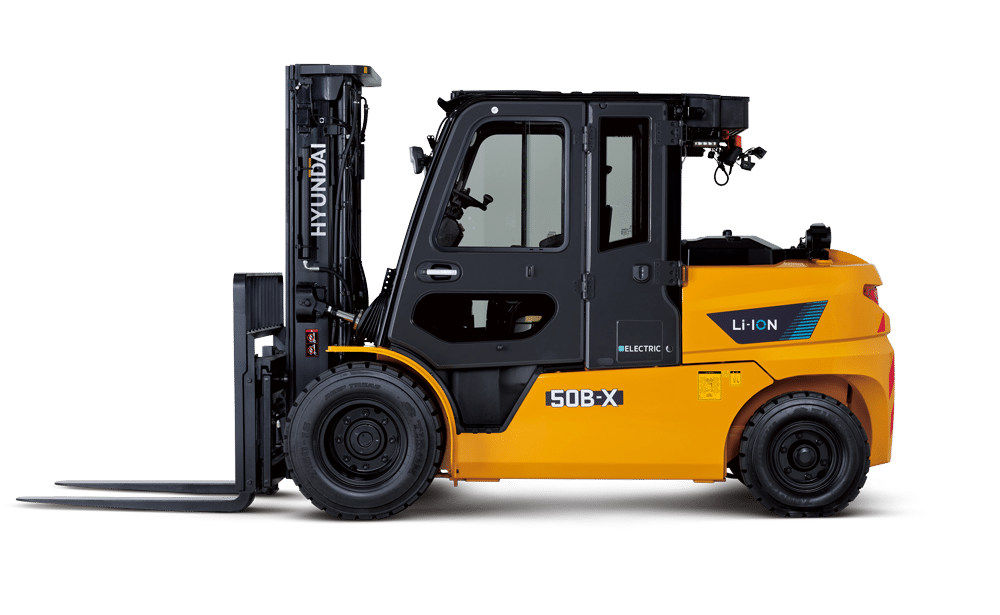
How does free lift work on a forklift?
With a forklift featuring freelift, the fork carriage with the forks first moves upward within the existing mast height. The outer mast remains at the same height during this process. Only when the free lift has been utilized does the mast extend further.
This allows you to lift a pallet without the forklift immediately becoming taller. This is practical when the machine is operating under a ceiling, inside a truck, or in a container. Without free lift, the mast could immediately become higher than the available space when lifting.
Forks move up
The forks lift the pallet within the existing mast height.
Mast stays low at first
The outer mast does not extend immediately, keeping the overall height limited.
Then the mast extends
Only after the free lift, the mast extends further for higher lifting heights.
When do you need a freelift?
Freelift is especially useful when you need to lift loads while the forklift itself is not allowed to get higher. In many warehouses this detail seems small, but in practice it can make the difference between working smoothly and getting stuck daily.
- During loading and unloading of trucks
- When working in containers
- For low doors or overhead doors
- When ceiling height is limited
- For low mezzanine floors or entresols
- For warehouses with tight aisles
- When transporting under pipes or beams
- For precise stacking in confined spaces

Freelift for Loading and Unloading
During loading and unloading in trucks or containers, free lift is important. The driver can lift the pallet while the mast remains within the available height.

Free lift for low clearances
In areas with low doors, overhead doors, or ceilings, freelift prevents the mast from immediately rising during the first part of the lifting movement.
Free lift and mast types: simplex, duplex, and triplex
Freelift is strongly linked to the type of mast. Not every forklift mast offers the same free lift. Therefore, it is always wise to look at the combination of mast type, lifting height, overall lowered height, and free lift when making a purchase.
| Mast type | Characteristic | Freelift? | Typical application |
|---|---|---|---|
| Simplex mast | Simple mast with limited lift height. | Usually, it is not the main reason for choosing, or at least not the primary one. | Low lift heights, simple applications. |
| Duplex mast | Two-stage mast, often suitable for medium lift heights. | May be equipped with a Freelift, depending on the configuration. | Warehouse, production, loading and unloading. |
| Triplex mast | Three-stage mast, high lifting height with a relatively low retracted mast height. | Often chosen with freelift. | Racks, containers, trucks and limited headroom. |
For many general-purpose electric forklifts, a triplex mast with full free lift is popular. This provides a good combination of high lifting height, limited clearance height, and practical usability in warehouses or shipping areas.
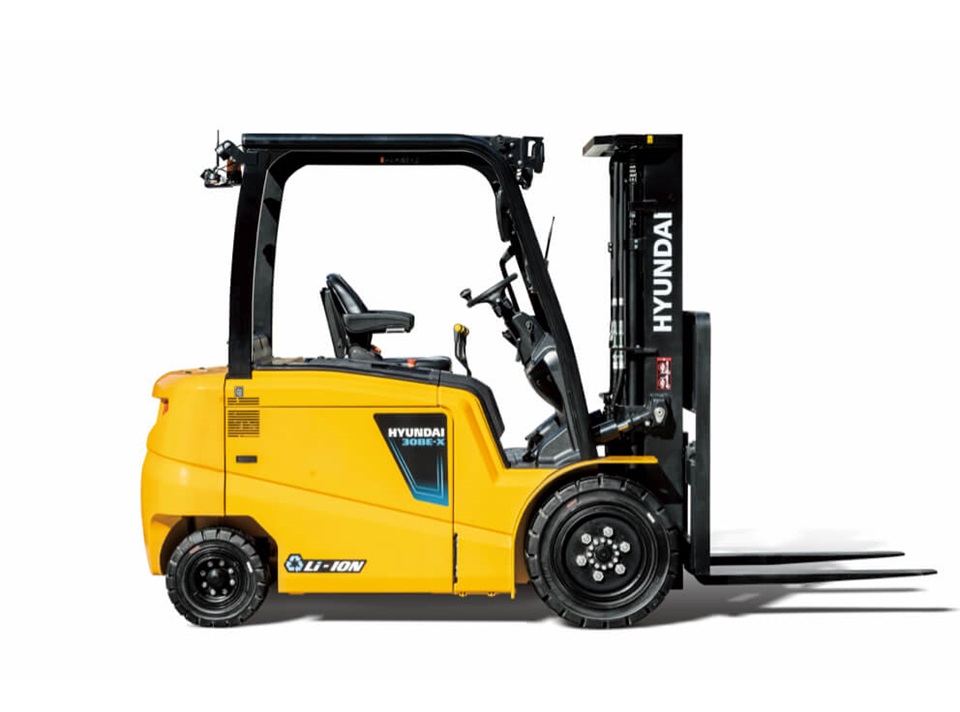
Free lift, lift height and clearance height: what is the difference?
With forklifts, free lift, lifting height, and clearance height are regularly confused. Yet they mean different things. Exactly the difference is important when choosing the right forklift.
| Understanding | Meaning | Why important? |
|---|---|---|
| Freelift | The height to which the forks can lift without the outer mast extending higher. | Important for containers, trucks, and low ceilings. |
| Lifting height | The maximum height to which the forklift can raise the forks. | Important for pallet racks and stacking height. |
| Clearance height | The total height of the forklift with the mast retracted. | Important for doors, gates, and passageways. |
| Building height | The physical height of the forklift or mast in the lowest position. | Important for transport, storage, and low workspaces. |
What should you pay attention to with a forklift with freelift?
Choosing a forklift with freelift is not something you do based solely on the term “free lift.” The correct configuration depends on the situation on the work floor. Therefore, always measure the lowest doorway, the highest racking position, and the space in which the driver must maneuver.
In addition, it is important to look at the load. A large, high, or long load can affect vision, stability, and residual capacity. Attachments such as a sideshift or fork positioner can also affect the forklift's capacity.
- Measure the lowest door or passage
- Check the maximum scaffolding height
- Determine whether you work in containers or trailers
- Check the required free lift
- Check mast type: simplex, duplex, or triplex
- Mind the view through the mast
- Check Remaining Capacity at Height
- Adjust the fork length and attachments properly.
Do you want to know if you need a stairlift?
Heftruckkopen.com helps you with practical advice on mast selection, lifting height, clearance height, free lift, and the right Hyundai forklift for your application. This prevents a new forklift from not fitting properly through your doors, racking, or containers.
Frequently asked questions about freelift
What is freelift on a forklift?
Freelift is the free lift of a forklift. The forks can then move upward without the outer mast extending upward immediately.
When is a stairlift important?
Free lift is important in low doorways, containers, trucks, low halls, and situations where you need to lift a pallet without the mast immediately becoming higher.
Is freelift the same as free lift height?
No. Lift height is the maximum height the forks can reach. Free lift is only the part where the forks move up without the outer mast getting higher.
Does every forklift have freelift?
No. Not every forklift has the same amount of freelift. This depends on the mast type and the chosen configuration.
What is the advantage of a triplex mast with freelift?
A triplex mast with freelift often combines a high lifting height with a relatively low collapsed mast height. This is useful for racking, containers, and low clearance passages.
Is freelift necessary for container work?
Frequently so. In a container, the height is limited. With freelift, the forklift can lift a pallet without the mast hitting the roof of the container directly.
What should I look out for with a forklift with freelift?
Pay attention to free lift, maximum lifting height, clearance height, mast type, visibility through the mast, load weight, and residual capacity at height.
 English
  Dutch
Dutch  German