
How does a forklift work in brief?
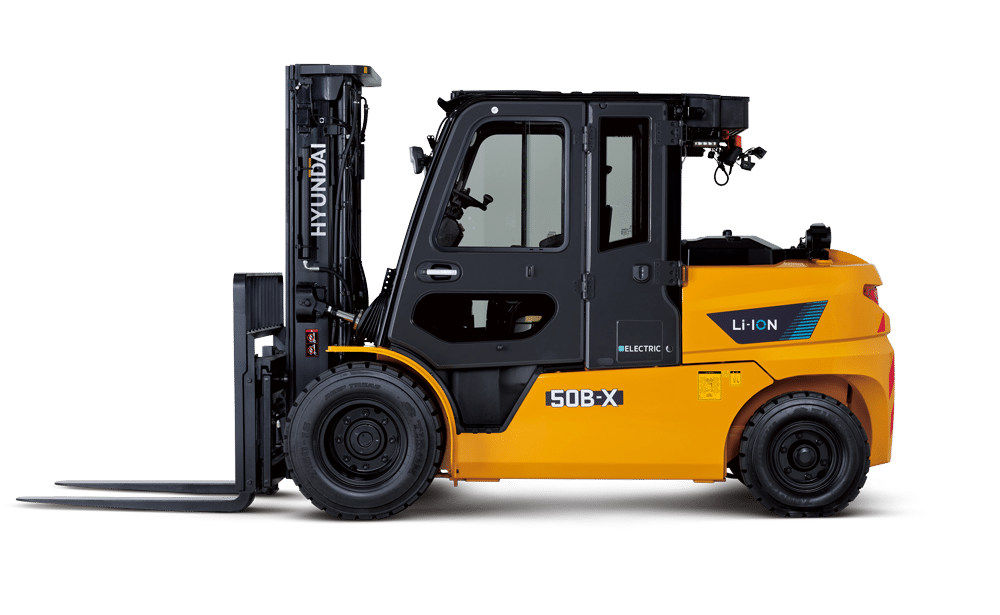
A forklift drives up to a pallet or load, slides the forks under the cargo, and lifts it using a hydraulic mast. The counterweight at the back keeps the machine balanced. Afterward, the driver can move, tilt, stack, or place the load into a truck.
The basis of a forklift is relatively simple: the machine combines driving movement with lifting power. Yet there is a lot of technology behind it. After all, the forklift must not only be able to drive and lift, but also remain stable, maneuver precisely, and work safely with loads that sometimes weigh thousands of kilograms.
Therefore, it is important to understand how the drive system, hydraulics, mast, forks, tires, and counterweight work together. Together, these components determine what a forklift can do and which machine best suits a warehouse, production hall, building materials trade, outdoor area, or industrial application.
The operation of a forklift step by step
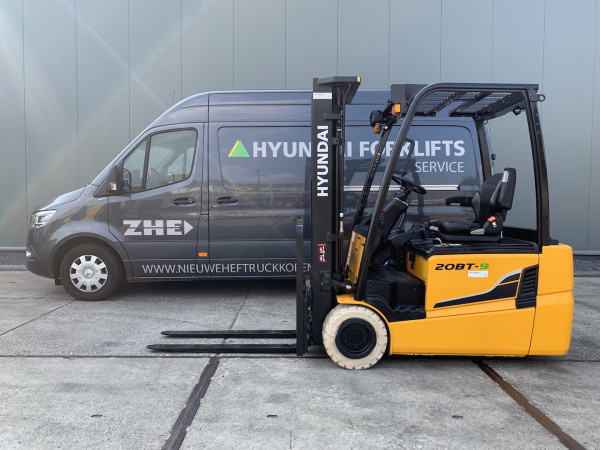
In practice, a forklift always goes through the same basic movements. The driver drives to the load, positions the forks, lifts the load, drives to the destination, and sets the cargo down in a controlled manner.
The driver positions the forklift
First, the driver calmly drives towards the pallet, machine, or load. The forklift must be positioned directly in front of the load. This prevents picking up the load at an angle, damage to pallets, and unstable loads.
The forks go under the load
The forks are raised to the correct height and pushed completely under the pallet or load. The fork length and the position of the load are important for stability.
The mast hoists the load.
With hydraulic power, the fork carriage moves upward. The mast guides this movement. Depending on the mast type, the forklift can lift higher or remain compact in case of limited headroom.
The mast tilts slightly backwards
By tilting the mast slightly backward, the load stays better on the forks. This helps especially during driving and braking.
The forklift drives to its destination
The driver drives with the load low to the ground to the unloading area, rack, or truck. Driving with a raised load is unsafe because the center of gravity becomes higher.
The load is lowered in a controlled manner
At the destination, the load is brought to the correct height, positioned straight, and lowered smoothly. After that, the forklift drives away in reverse.
Key components of a forklift
A forklift consists of several parts that together provide power, control, and safety. Especially when buying a forklift, it is important to understand these parts well.
| Part | What does it do? | Why is it important? |
|---|---|---|
| Mast | Guides the vertical movement of the forks. | Determines lift height, clearance height, and deployment in racking or containers. |
| Vorken | Bear the pallet or load. | The correct fork length prevents damage and instability. |
| Forkboard | Connect the forks to the mast. | Options such as sideshift or fork positioner can also be included. |
| Hydraulics | Provides lifting, lowering, and tilting. | Provides the power to move heavy loads in a controlled manner. |
| Counterweight | Compensates for the weight at the front. | Essential for balance and stability. |
| Tires | Provides traction, cushioning, and stability. | The right tire depends on the floor, outdoor use, and load. |
| Drive | Drive the forklift. | Can be electric, diesel, or LPG. |
| Cab or driver's compartment | Here the driver operates the forklift. | Visibility, ergonomics and safety are important in this regard. |
How does the hydraulics of a forklift work?
The hydraulics is the system that allows the forklift to lift, lower, and tilt. Simply put, the forklift uses fluid pressure to transmit force. When the operator operates a hydraulic lever, pressurized oil is sent to cylinders. Those cylinders move the mast, the carriage, or the tilt function.
As a result, a forklift can lift much more weight than would be possible with mechanical power alone. The hydraulics must be properly maintained, as leaks, wear, or contaminated oil can directly impact operation and safety.
Heaving and sinking
Hydraulic cylinders move the mast and carriage up or down.
Tilt
The mast can tilt forward or backward to position the load correctly.
Attachments
Options such as sideshifts, fork positioners, or clamps can also operate hydraulically.
Why does a forklift remain stable?
A forklift can lift heavy loads because the machine is built as a counterbalanced forklift truck. This means that the weight at the back compensates for the load at the front. However, this does not mean that a forklift can lift an unlimited amount of weight.
The stability depends on several factors. Consider the weight of the load, the distance of the load center of gravity, the lifting height, the floor slope, the speed, and the way the driver steers or brakes.
What is the load center?
The load center of gravity is the point where the weight of the load is balanced. The further forward the load is positioned, the heavier the load on the forklift becomes. Therefore, a long or irregular load can have a greater impact on stability than a compact pallet of the same weight.
Why are you driving with the load low?
A low load keeps the center of gravity of the forklift and load combination lower. That makes the machine more stable. Driving with a high-lifted load increases the risk of tipping over, especially when cornering, on slopes, over thresholds, or during sudden braking.
How does a forklift drive system work?
The drive system determines how the forklift drives and where the machine can best be used. The three best-known drive systems are electric, diesel, and LPG.
| Drive | How does it work? | Typical deployment |
|---|---|---|
| Electric forklift | It runs on a battery that powers electric motors. | Warehouse, production, logistics, food, and indoor use. |
| Diesel forklift | Uses a diesel engine for propulsion and hydraulics. | Outdoor areas, heavy loads, industry, construction materials, and cargo handling. |
| LPG forklift | It uses an LPG-powered gas engine. | Mixed indoor and outdoor use, provided the working environment is suitable. |
Modern electric forklifts are strong, quiet, and efficient. They are often chosen for indoor use and logistics processes. Hyundai Material Handling includes electric forklifts and LPG forklifts in its range, alongside warehouse equipment such as pallet trucks and stackers.
Working safely with a forklift
Because a forklift can move heavy loads, safety is crucial. The machine must be well-maintained, the operator must know how to work safely, and the forklift must be suitable for the load and the environment.
- Drive with the load close to the ground
- Check the load weight and center of gravity
- Use the correct fork length
- Watch out for visibility, blind spots and pedestrians
- Adjust your speed when turning and in narrow hallways
- Check tires, brakes, and hydraulics
- Use only suitable attachments
- Have the forklift inspected and serviced periodically
During a safety inspection, aspects such as brakes, hydraulics, mast, forks, steering system, safety devices, and tires are examined. This makes inspection and maintenance important for safe and reliable use.
Would you like to know which forklift is best suited for your situation?
The right forklift depends on your loads, lift height, workspace, floor conditions, operating hours, and preferred drive system. Heftruckkopen.com can help you with practical advice, Hyundai forklifts, service, parts, and a configuration tailored to your business.
Frequently Asked Questions About How a Forklift Works
How does a forklift work?
A forklift works with propulsion, hydraulics, mast, forks, and counterweight. The forks slide under the load, the hydraulics lift the mast, and the counterweight keeps the machine in balance.
How does a forklift lift a heavy load?
A forklift lifts a load using hydraulic cylinders. Those cylinders use oil pressure to move the mast and carriage upward.
Why does a forklift have a counterweight?
The counterweight at the back compensates for the load at the front. This keeps the forklift more stable while lifting and driving.
Why are you not allowed to drive with a raised load?
A raised load raises the forklift's center of gravity. As a result, the machine becomes less stable and the risk of tipping over increases, especially when cornering or on uneven floors.
What does the mast of a forklift do?
The mast guides the vertical movement of the forks. Depending on the type of mast, it determines, among other things, the lift height, clearance height, and free lift.
How does an electric forklift work?
An electric forklift uses a battery to power electric motors and hydraulic systems, allowing the machine to drive and lift with zero emissions during operation.
How does a forklift remain safe to use?
A forklift remains safe through proper use, adequate visibility, a low load position, proper maintenance, appropriate capacity, and periodic safety inspections.
 English
  Dutch
Dutch  German