
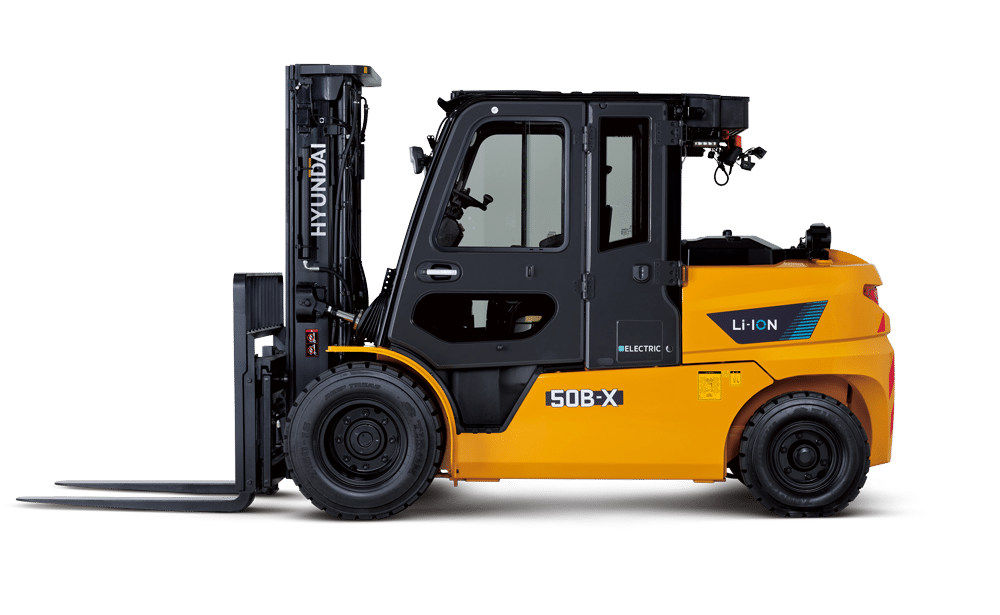
What is a forklift?
A forklift is a powered internal transport vehicle with two forks on the front. With these forks, the machine can lift, move, and stack pallets, crates, machines, and other loads. Forklifts are mainly used in warehouses, production halls, distribution centers, building materials trade, industry, and transshipment.
The forklift is one of the most important machines in internal transport. Without forklifts, many companies would need much more time, personnel, and physical strength to move goods. As a result, the forklift plays a major role in logistics, warehousing, production, and shipping.
After all, not every forklift is the same. A compact electric forklift for a warehouse has a completely different function than a heavy diesel forklift in an outdoor yard. Therefore, it is important to first understand how a forklift works and which parts affect its performance.
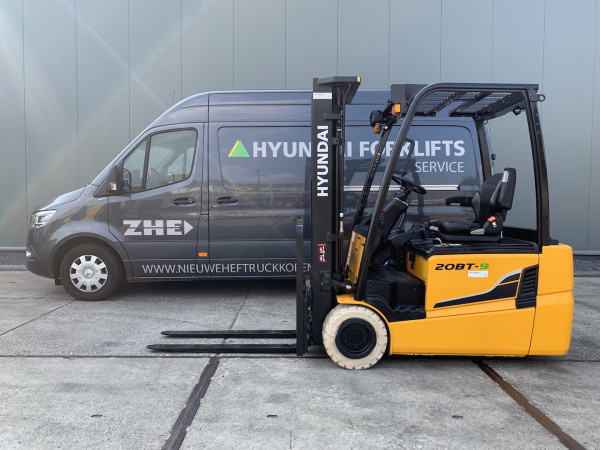
How does a forklift work?
A forklift works with a combination of drive system, hydraulics, mast, forks, and counterweight. The driver operates the machine from the cabin or operator's station. Using the drive pedals, steering system, and hydraulic levers, the driver can drive, lift, lower, tilt, and position accurately.
The forks slide under a pallet or load. Then the mast lifts the forks up. The counterweight at the back of the forklift ensures that the machine remains balanced. The heavier and higher the load, the more important stability, load center, and residual capacity become.
Heffen
The mast raises the forks and the load using hydraulics.
Move
The forklift transports loads from storage to production, shipping, or truck.
Stack
Goods can be placed in racks, block stacks, or trailers.
Key components of a forklift
A forklift seems simple, but consists of multiple parts that together determine what the machine can do. Especially the mast, forks, tires, drive, and capacity are important when choosing a new forklift.
| Part | Function | Why important? |
|---|---|---|
| Mast | Raise the forks and the load. | Determines the lift height, clearance height, and deployment in racks or containers. |
| Vorken | Bear the pallet or load. | The correct fork length prevents unstable or unsafe loads. |
| Counterweight | Keep the forklift balanced. | Important for stability under heavy loads. |
| Hydraulics | Provides lifting, lowering, and tilting. | Determines control and precision while working. |
| Tires | Ensuring grip, comfort, and stability. | The right tire depends on the floor, outdoor area, and load. |
| Drive | Electric, diesel or LPG. | Determines where the forklift is best deployed. |
What types of forklifts are there?
Forklifts are often classified by their propulsion. The three best-known types are electric forklifts, diesel forklifts, and LPG forklifts. In addition, there are also warehouse machines such as reach trucks, stackers, and electric pallet trucks.
Electric forklift
An electric forklift runs on a battery. As a result, this machine is quiet, emission-free during use, and very suitable for warehouses, production halls, food, retail, logistics, and other indoor environments. Modern electric forklifts are increasingly powerful and can also be attractive in heavier applications.
Diesel forklift
A diesel forklift is often used for heavy loads, intensive outdoor applications, rough terrain, building materials distribution, metal, wood, concrete, cargo handling, and industrial applications. Diesel forklifts are powerful, robust, and suitable for heavy-duty use.
LPG forklift
An LPG forklift is an all-round solution for companies looking for flexibility. LPG is often chosen for mixed operations, where a forklift is used both indoors and outdoors. However, ventilation, safety, and the working environment must always be carefully considered.
| Forklift | Best effort | Popularly chosen by |
|---|---|---|
| Electric forklift | Indoor use, warehouse, production, logistics | Distribution centers, food companies, wholesalers |
| Diesel forklift | Outdoor area, heavy loads, industry | Building materials trade, steel companies, ports |
| LPG forklift | Mixed indoor and outdoor deployment | Manufacturing companies, logistics, trade |
| Reach Truck | High shelves and narrow aisles | Warehouses and distribution centers |
| Stacker | Light stacking and palletizing work | Small warehouses and shops |
What is a forklift used for?
A forklift is used in places where goods need to be moved quickly, safely, and efficiently. Think of loading and unloading trucks, replenishing pallet racks, moving machinery, or stacking products in a warehouse.
- Loading and unloading of trucks
- Moving pallets in warehouses
- Stacking goods in racking systems
- Supply of materials to production
- Working in outdoor areas or loading bays
- Moving heavy or long loads
- Order processing and internal transport
- Support in forwarding and transshipment
Safety and inspection of forklifts
A forklift is a powerful piece of equipment. That is why it is important to use it safely. The operator must know how the machine responds, what its maximum lifting capacity is, and how to transport a load safely. Speed, visibility, the ground surface, the load’s center of gravity, and driving behavior, in particular, have a significant impact on safety.
Regular inspections and maintenance are also important. At Heftruckkopen.com, we supply equipment with a focus on safety, reliability, and service. A VA-Keur safety inspection is a robust standard for minimizing risks and work interruptions.
Which forklift truck suits your company?
You don’t choose the right forklift based solely on tonnage. A good choice starts with practical considerations. Where will the forklift be used? How heavy are the loads? How high do they need to be lifted? How many hours a day will the machine be used? And do you primarily work indoors, outdoors, or both?
That is why a forklift is always custom-built. For example, a warehouse with narrow aisles requires a different solution than a steel mill with heavy loads in an outdoor area. The choice between electric, diesel, and LPG also depends on operating time, flooring, ventilation, charging options, and future plans.
- Weight of the load
- Dimensions of pallets or goods
- Required lifting height
- Available aisle width
- Indoor use or outdoor use
- Operating hours per day
- Surface type and tires
- Cargo space, battery choice, or fuel
Need help choosing the right forklift?
Do you want to know which forklift suits your company, workspace, and daily use? Heftruckkopen.com helps you with practical advice, Hyundai forklifts, service, parts, and a suitable configuration for your application.
Frequently asked questions about forklifts
What exactly is a forklift?
A forklift is a powered internal transport vehicle with forks used to lift, move, and stack pallets, goods, and heavy loads.
What do you use a forklift for?
A forklift is used for loading and unloading, internal transport, pallet relocation, stacking, production supply, and transshipment.
What types of forklifts are there?
The best-known types are electric forklifts, diesel forklifts, and LPG forklifts. In addition, there are warehouse machines such as reach trucks, stackers, and electric pallet trucks.
What is the difference between a forklift and a reach truck?
A forklift is versatile for loading, unloading, and moving. A reach truck is primarily intended for warehouses with high shelving and narrow aisles.
Is an electric forklift suitable for indoor use?
Yes. An electric forklift is often well-suited for indoor use because it operates quietly and does not emit exhaust fumes during operation.
When do you choose a diesel forklift?
A diesel forklift is particularly well-suited for heavy loads, intensive outdoor use, rough terrain, and applications in industry, the building materials trade, and cargo handling.
What should you pay attention to when choosing a forklift?
Pay attention to lifting capacity, lifting height, load center, mast type, fork length, tires, drive type, operating hours, workspace and safety.
 English
  Dutch
Dutch  German