Skip to content
Official Hyundai importer for the Netherlands · ★★★★★ 5,0/5
⚡ Response within 24 hours ☎ 0168 467 467 Free quote
Blog Metal industry Heavy loads Diesel & heavy electric
Heftruckkopen.com • official Hyundai importer

Forklift for the metal industry: what should you look for when purchasing?

A forklift truck for the metal industry must be able to handle heavy-duty work. After all, you are not only moving pallets, but often also steel profiles, platen, molds, bundles, tubes or other heavy and long loads.

That's why you don't just look at tonnage. It's precisely also center of gravity of the load, fork length, stability, subgrade en sight determine whether a truck remains safe and productive.

In addition, many metal companies operate with long working hours, multiple drivers, and varying load sizes. As a result, the right configuration is even more important than in a standard warehouse.
Heavy and long loads Think of steel, bundles, plates, tubes, and heavy production work.
The load's center of gravity is a major factor With longer loads, the required truck class can quickly escalate.
Indoor and outdoor deployment Many metalworking companies combine a warehouse, outdoor yard, and loading/unloading operations.
Safety and Visibility Lines of sight and stability are particularly crucial when handling steel and long loads.
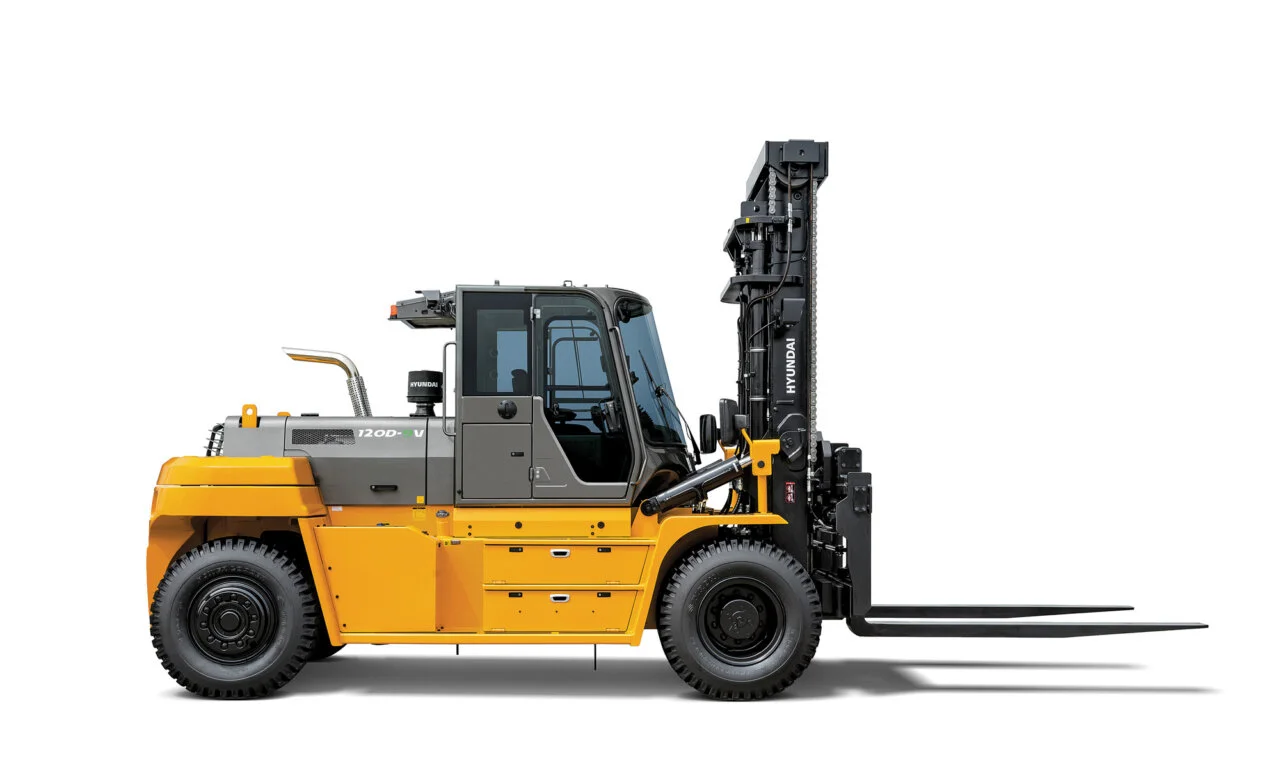
Hyundai heavy forklift for metal industry and heavy loads
Typical deployment
Steel & Heavy Loads
Important
Stability
Choice
Diesel or heavy-duty electric

Why the Metal Industry Has Different Requirements

In a metal company, loads are often more compact, heavier, or longer than in many other sectors. As a result, the truck behaves differently when driving, steering, and lifting.

Additionally, you often work with tight production schedules. Therefore, downtime is extra costly. Precisely for this reason, service, parts, and a good specification weigh heavily from day one.

What companies often end up doing

  • Diesel forklifts for outdoor work, high duty cycles and heavy loads
  • Heavier electric trucks for companies that also take emissions and noise into account
  • 4-wheel trucks for greater stability during heavy-duty work
  • Extra hydraulic functions for fork positioners or other attachments
  • Cabin and good visibility when fieldwork and longer-term deployment are important

8 Key Considerations When Choosing a Forklift for the Metal Industry

1. Center of Gravity of the Load With plates, bundles, and longer profiles in particular, the center of gravity often shifts forward. As a result, you may need a heavier truck than would seem logical based solely on weight.
2. Fork Length Forks that are too short cause instability in the load. Forks that are too long, on the other hand, can be cumbersome during production or storage. That’s why fork length must be tailored to your product mix.
3. Stability when turning When handling heavy metal products, you want a forklift that provides confidence when steering and braking. That’s why the wheelbase, forklift weight, and tire type are especially important.
4. Substrate Many metal companies combine a warehouse, loading dock, and outdoor area. As a result, the truck must be able to operate reliably both indoors and outdoors.
5. Hydraulic Functions Fork positioners, side shifts, or other hydraulic options can save a lot of time. In addition, they help position loads more accurately and safely.
6. Cabin or open design Do you often work outdoors or in drafty loading areas? If so, a cab is usually the best choice. If you work mainly indoors, driving with the top down may be more comfortable and practical.
7. Diesel or electric Diesel remains a strong choice for heavy outdoor work and long days. However, electric vehicles become a more attractive option if you work indoors, want to reduce emissions, or have access to modern charging infrastructure.
8. Service and Reliability Metal companies often operate on tight schedules. That is why you want fast service, a good supply of parts, and a truck that is properly configured from the start.
Hyundai forklift for heavy-duty industrial use and the metal industry
Strong in industrial applications For metal companies, not only power matters, but also predictable driving behavior, visibility, and continuity.
Hyundai heavy-duty diesel forklift for steel, metal, and outdoor use
Diesel remains strong during heavy work For heavier unit loads and outdoor applications, diesel remains a logical choice in many cases.
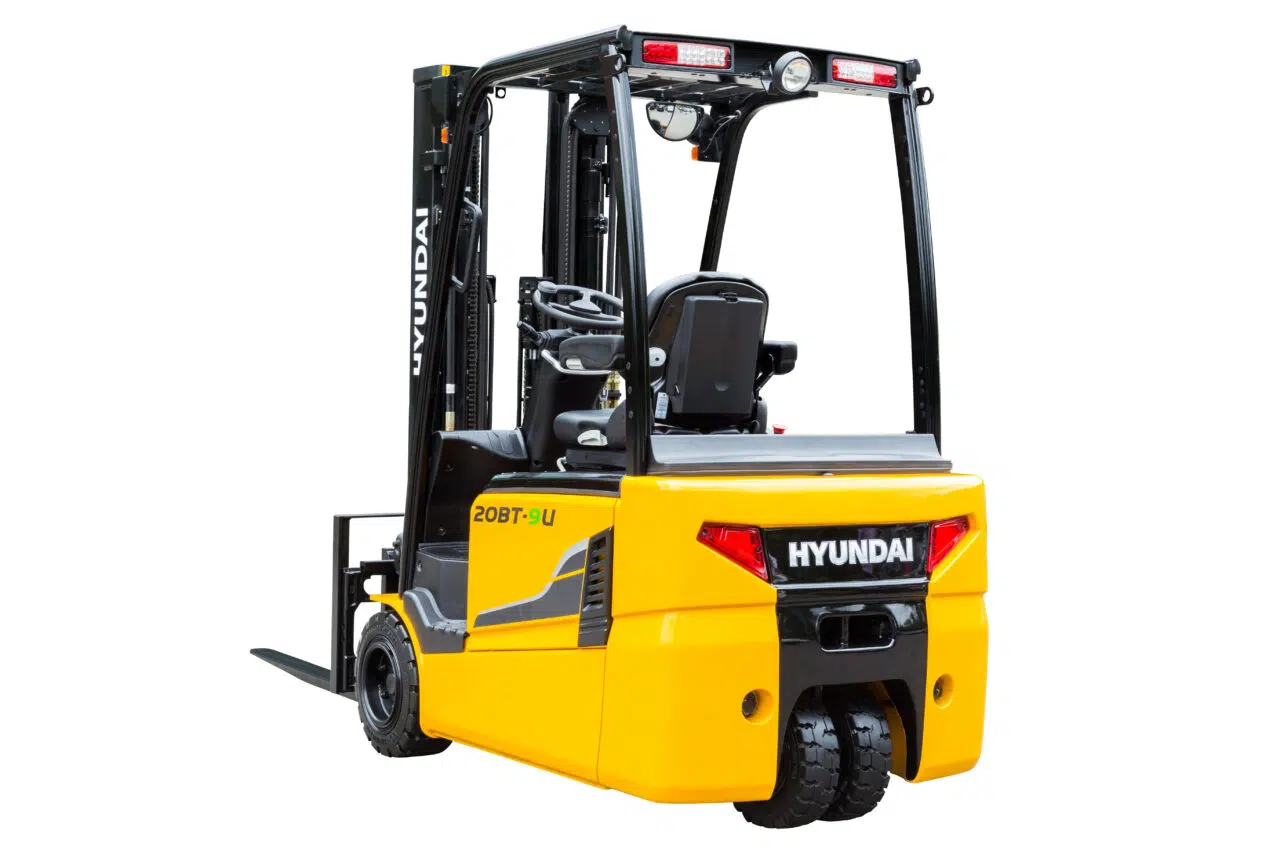
Hyundai electric forklift for production facilities and internal metal transport
Electric is growing Where interior work, noise and emissions become more important, electric is moving further ahead.

When diesel makes sense

If you drive outdoors a lot, move heavy loads, and work long shifts, diesel often remains the most practical choice. In addition, refuelling is quick and the truck remains immediately operational.

  • Heavy outdoor work and high daily workload
  • Long loads and heavy unit loads
  • Little time for charging breaks
  • Long driving times and intensive handling

When electricity becomes interesting

Do you mainly work indoors, or do you combine indoor and outdoor work? If so, an electric vehicle might be a good option—especially when you factor in emissions, noise, and modern charging options.

  • Combination of production hall and logistics
  • Lower emissions and quieter operation desired
  • Good charging infrastructure is available
  • Interest in the modern heavy electric segment

Common Mistakes When Using a Forklift for Metal

Looking only at weight When it comes to metal products, simply comparing kilograms isn't enough. The center of gravity and length are just as important.
Underestimating fork length An incorrect fork length makes handling unstable and less safe.
Forgot the hydraulics Especially in practice, a sideshift or fork positioner can save a lot of time and damage.
Failure to Pick Up the Service on Time In manufacturing, unexpected downtime costs money right away. That’s why service should be a top priority.
Which forklift is suitable for the metal industry?
That depends on your payload, center of gravity of the load, fork length, submissions and whether you work indoors, outdoors, or a combination of both. In the metal industry in particular, the overall configuration matters more than just the nominal capacity.
Why is the center of gravity so important for steel and metal?
Because longer or unevenly distributed loads affect the effective lifting capacity. As a result, a forklift that seems heavy enough on paper may still turn out to be too light in practice.
Is diesel or electric better for the metal industry?
That depends on how you use it. Diesel is often a good choice for heavy-duty outdoor work and long workdays. Electric vehicles, on the other hand, are a good option when indoor use, noise, emissions, and charging options become more important.
Are additional hydraulic functions useful?
Yes, often. Sideshift, fork positioners, and other hydraulic functions help position loads faster, more precisely, and more safely. As a result, productivity usually increases immediately.
What information do you need to include with your application?
Please send your payload, center of gravity of the load, product length, fork length, lifting height, subgrade, daily hours worked and desired hydraulic functions along with it. That way, you'll receive a suitable proposal more quickly.
Advice for Metalworking Companies

The best forklift for metal is the one that can safely handle your actual load

Are you looking to buy a forklift for the metal industry? If so, we’d be happy to advise you on capacity, load center of gravity, fork length, hydraulics, diesel or electric power, and a model that suits your specific needs.

en_USEnglish

Easily request a quote for your forklift

Do you want to buy a forklift and know the costs immediately? Then request a no-obligation quote using the form below; we will contact you within 24 hours.