CE mark on the machine
Check to make sure the CE marking is clearly visible on the machine or nameplate and that the machine was delivered in good working order and complete.
CE marking may seem like something to be taken for granted by many buyers, but it is wise to pay conscious attention to it. Especially if you are buying a new forklift for daily professional use, you want to know what CE exactly means, which documents belong with it, and what you should pay close attention to upon delivery.
In this blog, we clearly explain what CE marking entails, what it does not automatically say about the suitability of the forklift, and how you can prevent missing important documentation or machine data.

CE marking indicates that the manufacturer declares that the machine complies with the relevant European product regulations applicable to that product. For you as a buyer, it is therefore an important basic condition when purchasing a new forklift.
Even so, CE marking does not mean that “everything is automatically fine.” A forklift truck may have been formally placed on the market correctly, but still not be an optimal fit for your working environment, operating hours, loads, mast choice, or attachments. Therefore, it is wise to always view CE marking in combination with the complete documentation and the actual configuration of the machine.
Check to make sure the CE marking is clearly visible on the machine or nameplate and that the machine was delivered in good working order and complete.
Always ask whether the corresponding declaration of conformity is included in the delivery package. This is part of a proper and complete delivery of a new machine.
Check to make sure the model, serial number, and machine specifications match what you ordered. This will prevent any confusion with service, administrative records, and any future trade-ins.
In addition to CE certification, you also want a clear user manual, instructions upon delivery, and well-organized documentation for your internal records.
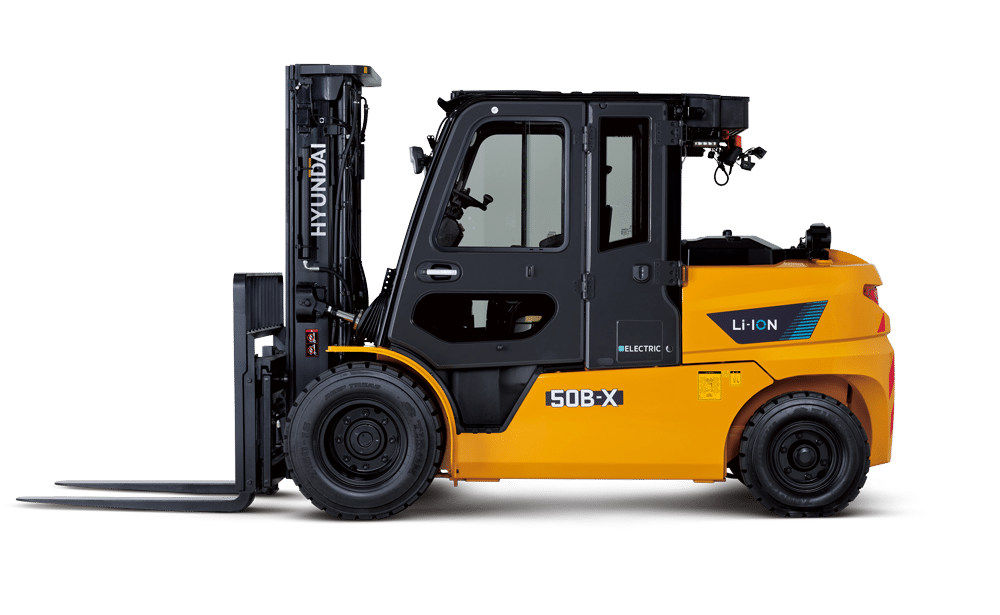
A common mistake is for buyers to assume that CE marking automatically means the forklift is the best choice for their situation. In reality, you still need to consider lifting capacity, load center of gravity, fork length, mast, battery technology, operating hours, tires, and any attachments.
That’s exactly why it’s a good idea to combine CE marking with a thorough technical assessment. Especially when it comes to electric forklifts, heavy-duty outdoor applications, or machines with custom options, you don’t just want to meet the basic requirements—you also want to be sure that the truck is comfortable, safe, and efficient to use in practice.
Whether you choose a modern electric forklift for warehouse and production use, or a diesel forklift for heavier outdoor work: a complete set of documentation remains essential. This includes machine identification, the operator’s manual, configuration data, and a proper handover.
Ideal for warehouses, manufacturing facilities, and indoor use where emission-free, quiet, and efficient operation is important.
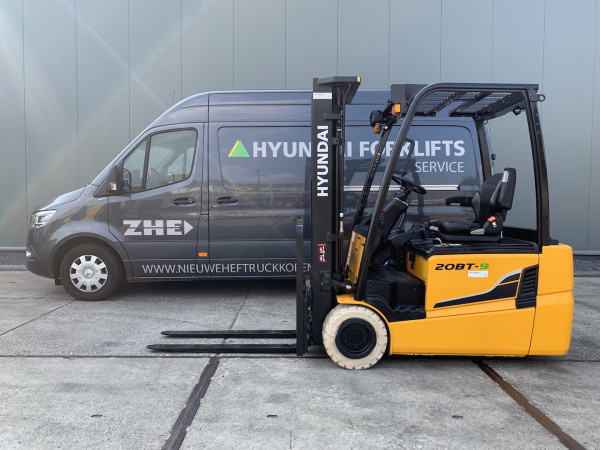
Ideal for businesses looking for a reliable machine with prompt delivery, clear instructions, and professional advice.
For outdoor work and heavier applications, the right configuration, tires, mast, and drivetrain are especially important.
A professional buyer looks beyond just the label. The documentation, type plate, and complete configuration must also be in order.
When it comes to sideshift, fork positioners, cabs, or additional hydraulic functions, you want to be sure that the entire machine is put together in a logical way.
As a result, you may miss important information later on during maintenance, audits, internal training, or if you decide to trade in the machine.
With the right machine data and documentation, maintenance, parts supply, and service can be handled more quickly and accurately. This helps minimize downtime.
A complete file helps with driver training, equipment management, future inspections, and the professional administration of your equipment.
With modern electric forklifts, battery selection, charging infrastructure, and usage profile often play a more significant role. For heavier trucks designed for outdoor use, however, tires, the mast, hydraulics, and stability are particularly important.
In both cases, you want more than just a basic label: you want a comprehensive and professional handoff with accurate information.
Consider the CE marking as an important prerequisite, but always combine it with a thorough review of the documentation, machine specifications, and the forklift’s actual suitability for your application.
For a new machine, CE marking should be part of a proper market launch and delivery in accordance with the relevant European product regulations.
No. The CE marking pertains to the machine’s compliance when it is placed on the market. The VA certification pertains to periodic safety inspections during use.
Yes, be sure to include a declaration of conformity, a user manual, machine specifications, and a well-organized delivery dossier for your records and future management.
No. You also need to consider capacity, lift height, surface conditions, battery options, operating hours, and any attachments.
Especially with electric forklifts, heavy trucks, custom configurations, and intensive daily use, it is smart to check documentation and machine data extra carefully.

 English
  Dutch
Dutch  German