
Electric or diesel forklift: what suits your business?
Are you doubting between a buy electric forklift or a buy diesel forklift? In that case, making the right choice is more complicated than simply looking at the purchase price or lifting capacity. Your work environment, operating hours, loads, maintenance needs, and future plans determine which forklift will provide the best return on investment in the long run.
In this guide, we compare both drive systems based on the factors that really matter in practice: indoor or outdoor use, energy consumption, maintenance, comfort, suitability for intensive use, and total cost. This will help you make a choice in 2026 that is not only technically sound but also commercially wise.
Contents of this guide
- What is the main difference?
- When is electric the smartest choice?
- When is diesel still the best choice?
- Costs, Maintenance, and TCO
- Comfort, visibility, and safety
- Real-World Examples by Work Environment
- Comparison Chart: Electric vs. Diesel
- Rent first or buy right away?
- Conclusion: What’s right for your business?
- Frequently Asked Questions
What is the main difference between electric and diesel?
The biggest difference lies in the work environment and daily commitment. An electric forklift usually fits exceptionally well in warehouses, production halls, and other indoor locations where quietness, zero-emission operation, and precise maneuvering are important. A diesel forklift, on the other hand, excels in heavier outdoor work, longer operating hours, and rougher conditions.
As a result, the question isn't just which truck is more powerful or more modern, but above all: Which drive system best suits your daily practice?
The core of the choice
- Do you mainly work indoors? If so, an electric vehicle often makes more sense.
- Do you mainly work outdoors, in wet or dirty conditions? If so, diesel often holds up well.
- Do you have a lot of driving hours and heavy loads? If so, reliability is especially important.
- Are noise, emissions, and comfort important to you? If so, electric vehicles often score higher.
When is buying an electric forklift the smartest choice?
A buy electric forklift is often the most logical step for companies operating in warehouses, distribution centers, shipping areas, and manufacturing environments. In these settings, it’s not just lifting capacity that matters, but also driving comfort, maneuverability, low noise levels, and cleaner operations.
Electric forklifts are particularly appealing if you work indoors, have a smooth floor, want low emissions, and are looking for a machine that handles well during daily pallet handling, loading and unloading, or internal transport. Especially for companies that invest with an eye toward the future, electric models are increasingly becoming the preferred choice.
Ideal for indoors
In warehouses and production facilities, electric models are often the best choice because of their quiet operation, ease of use, and suitability for daily internal transport.
Lower daily maintenance workload
In many operating scenarios, you’ll benefit from a low-maintenance drivetrain and a smooth, quiet driving experience for the driver.
Strong in Logistics
Especially when it comes to frequent short trips, precision work, and tight spaces, electric vehicles often offer clear advantages in terms of maneuverability and control.
When is buying a diesel forklift still the best choice?
A buy diesel forklift remains the right investment in many situations. Think of outdoor areas, heavy loads, intensive use, longer driving distances, and environments where mud, dust, rain, or rough terrain play a role. There, you want a truck that is practical, powerful, and immediately deployable.
Diesel remains a logical choice, especially for higher capacities and heavy-duty work in industry, transshipment, construction-related logistics, and heavy loading and unloading processes. Diesel can also still be a very attractive commercial option if you work outdoors a lot and want to minimize your dependence on charging infrastructure.
Diesel often goes well with
- outdoor areas and open storage
- heavier loads and higher capacities
- intensive loading and unloading processes
- wet, dirty or harsh working conditions
- companies where continuous operation is more important than intermittent charging
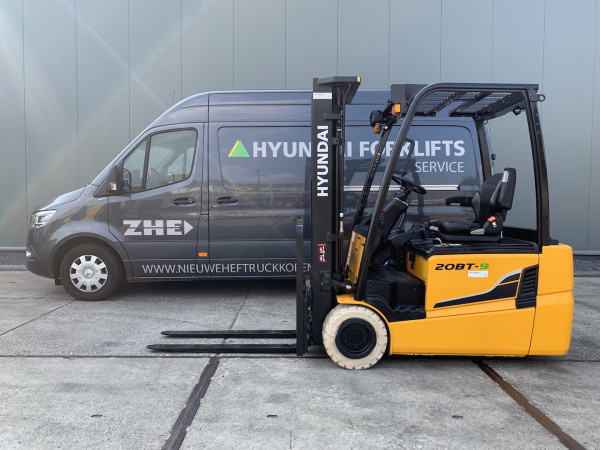

Costs, maintenance and total cost of ownership
Many companies compare the purchase price first. That is understandable, but it does not give the complete picture. A forklift must not only fit within the investment budget, but also align with your daily operating costs, maintenance schedule, and expected lifespan.
When it comes to electric, you look at battery choice, charging routine, usage per shift, and total operating hours, among other things. With diesel, fuel consumption, maintenance, outdoor use, and machine load play a larger role. That is why it is smart to look not only at the purchase price, but at the entire usage phase over several years.
Electrical: what do you look out for?
- battery or charging strategy
- operating hours per day
- possible shift work
- storage space
- suitability for indoor use
Diesel: what do you look for?
- fuel consumption
- intensity of outdoor work
- weight of the loads
- maintenance interval
- Impact on the Site and Surrounding Area
Comfort, vision and safety count for more than many buyers think
A forklift is used daily by people. Therefore, when choosing between electric or diesel, you must also look at cabin comfort, all-around visibility, controls, steering behavior, and general peace of mind for the driver. A machine that drives more pleasantly and offers better visibility helps not only the operator, but also productivity on the work floor.
In addition, safety, maintenance, and periodic inspections remain important, regardless of the type of drive system. Therefore, always ask how inspections, service, and delivery checks are handled. This will help you avoid surprises after delivery.
Security questions you should always ask
- How clear is the view of the forks, the load, and the work area?
- What lighting or signaling is required?
- Are non-marking tires or other floor-friendly options preferred?
- How are maintenance and periodic inspections handled?
- Is the truck really a good fit for your operators and operating hours?
Real-world examples: Which drive system is best suited for which environment?
| Work Environment | Often the best choice | Why |
|---|---|---|
| Narrow-aisle warehouse | Electric | Maneuverable, quiet, clean, and pleasant for indoor use |
| Production hall with daily pallet traffic | Electric | Comfortable, precise, and suitable for internal logistics |
| Outdoor area with heavy loads | Diesel | Reliable in harsh conditions and during intensive outdoor work |
| Industry or transshipment with long deployment hours | Diesel | Practical for heavy-duty use and continuous operation |
| Mixed-use, Concerns About Capacity | Depending on practice | Ask for advice or test first through rental or demonstration |
Comparison: Should You Buy an Electric Forklift or a Diesel Forklift?
| Part | Electric | Diesel |
|---|---|---|
| Best effort | Indoor, logistics, warehouse, production | Outdoors, heavy work, harsh conditions |
| Noise & ride comfort | Quiet and comfortable | More focused on robust deployment |
| Maintenance experience | Often advantageous in daily use | Depending on intensity and work environment |
| Suitable for heavy-duty outdoor use | More limited depending on application | Very strong |
| Charging/refueling logistics | Load planning needed | Continue working immediately with fuel |
| Forward-looking indoor use | Very interesting | Often less logical |
Still in doubt? Test the practice first
Sometimes the best choice is not to buy immediately, but first to test what works best in your situation. Especially if you are in doubt between electric or diesel, temporary rental or a practical test can provide a lot of clarity regarding capacity, driving comfort, and deployability.
For temporary deployment or to gain experience first, you can also look at HeftruckHuren.com.
Conclusion: What’s right for your business?
A buy electric forklift is often the smartest choice for businesses that work indoors and value comfort, precision, cleaner operations, and a modern logistics solution. An buy diesel forklift remains exceptionally strong in heavy-duty outdoor work, harsh conditions, and intensive use where continuous work is the priority.
So you do not make the best choice based on gut feeling, but based on your work environment, loads, operating hours, and future plans. Would you like to have that properly assessed? Then please contact us via Forkliftbuy.com.
 English
  Dutch
Dutch  German