
BE-X series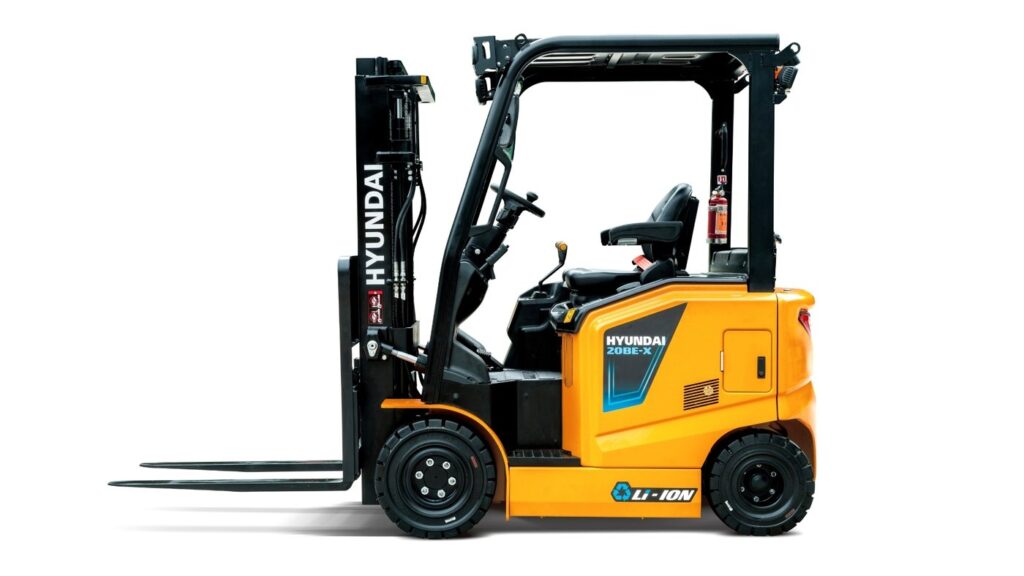
Hyundai 20BE-X
- Capacity2.000 kg
- DriveElectric
- Inventory1 op voorraad
€23,950excl. BTW · promotion
A buy lithium-ion forklift is often more expensive than a lead-acid battery forklift. However, with intensive use, lithium-ion can actually be more cost-effective. The payback period depends on operating hours, charging moments, maintenance, downtime, and your work process.

De vraag “is lithium-ion de meerprijs waard?” komt steeds vaker terug bij bedrijven die een nieuwe elektrische forklift willen kopen. Het eerlijke antwoord: niet altijd. Bij lichte inzet kan een loodzuuraccu prima voldoen. Maar bij intensief gebruik, ploegendienst, korte laadmomenten of hoge stilstandskosten kan lithium-ion juist financieel slimmer zijn.
Short conclusion: Lithium-ion pays for itself primarily faster when the forklift runs many hours, can charge intermittently, is allowed little downtime, and when maintenance, battery swaps, or charging space pose a problem.
A lithium-ion forklift typically has a higher purchase price than a comparable electric forklift with a lead-acid battery. As a result, lead-acid often looks more cost-effective on paper. But the purchase price is only one part of the equation.
With a forklift, it's all about total cost of ownership. Think of charging time, maintenance, energy consumption, availability, battery life span, downtime, extra batteries, charging space, and your drivers' productivity. Especially with daily use, the difference can become significant.
You can calculate the payback period of lithium-ion by dividing the additional investment by the annual savings. Those savings do not come from a single component, but from a combination of several small and large benefits.
Example: if lithium-ion costs €6,000 extra and you save €2,000 per year, the payback period is about 3 years. After that, the benefit continues in the form of less downtime, less maintenance, and higher uptime.
This formula is simple, but the quality of the calculation depends on the input. Therefore, you must not only compare the battery price, but above all the practical reality: how many hours does the forklift drive, how often does it need to be charged, and what does downtime cost?
A good calculation looks beyond the battery. The most important question is: what costs does lithium-ion prevent in your situation? At some companies, it is mainly about maintenance. At other companies, it is precisely about availability, battery swaps, or production downtime.
| Cost item | Lead acid | Lithium-ion | Impact on ROI |
|---|---|---|---|
| Purchase price | Warehouse | Higher | Lithium starts with an additional investment. |
| Loading time | Longer and less flexible | Opportunity for interim charging | Great advantage with shift work or short breaks. |
| Battery maintenance | Needs more attention | Less maintenance | Saves time and reduces the risk of errors. |
| Availability | Depending on the loading schedule | Higher with good charging strategy | Important when downtime is costly. |
| Battery exchange | Sometimes needed with intensive use | Often not necessary | Saves space, time, and steps. |
| Cargo space | Sometimes a separate room is needed | Often easier to organize | Can make a practical and financial difference. |
Lithium-ion pays for itself primarily when a forklift is used heavily. The more operating hours per day, the greater the advantage of opportunity charging and high availability. With only one short workday per week, the payback period is often too long. With daily use or multi-shift operations, the math becomes much more interesting.

Lead-acid batteries are certainly not “bad” or outdated in every situation. For many companies, lead-acid batteries remain an excellent choice, especially when the forklift isn’t in continuous operation and there’s enough time to charge it slowly.
If you run a single shift, can charge the truck in the evening, and the operation is straightforward, the lower purchase price of lead-acid can be attractive. The payback period for lithium-ion then becomes longer, because you derive less benefit from opportunity charging.
Please note: Lithium-ion isn't automatically the best choice. For light-duty use, the extra cost may be unnecessary. The right choice depends on your workday, charging times, and downtime costs.
A warehouse uses an electric forklift an average of 3 to 4 hours per day. The truck can charge every evening. There is no shift work and downtime is annoying, but not immediately critical. In this case, lead-acid can remain financially logical.
| Factor | Situation | Effect on Lithium ROI |
|---|---|---|
| Operating Hours | 3 to 4 hours a day | Limited benefit |
| Charging Time | Plenty of time every evening | Little benefit of fast charging |
| Downtime Costs | Low to moderate | Limited savings |
| Conclusion | Lead-acid batteries can be a great financial choice here. Lithium-ion batteries can be convenient, but they aren't always necessary. | |
A manufacturing company uses the forklift across two shifts. The machine must remain available for supplying materials, removing pallets, and loading/unloading. There are short breaks, but few long charging opportunities.
This is where lithium-ion becomes more interesting. The truck can charge intermittently during breaks and does not need to be out of service for long periods. If downtime slows down production, that weighs heavily in the equation.
| Factor | Situation | Effect on Lithium ROI |
|---|---|---|
| Operating Hours | Many hours spread over two shifts | Major advantage |
| Charging Time | Short breaks and limited long charging time | Interim charging valuable |
| Downtime Costs | Production Delays Possible | ROI becomes faster |
| Conclusion | Lithium-ion is often easy to defend here, especially with intensive use. | |
Bij 3-ploegendienst is beschikbaarheid het belangrijkste. De heftruck rijdt bijna continu en er is weinig ruimte voor lange laadblokken. In zo’n situatie kan een klassieke loodzuuroplossing betekenen dat u extra accu’s, wisselmomenten, ruimte en discipline nodig heeft.
Lithium-ion wordt dan vaak niet alleen een comfortkeuze, maar een operationele keuze. De vraag is niet alleen wat de accu kost, maar wat het kost als de truck niet beschikbaar is.
| Factor | Situation | Effect on Lithium ROI |
|---|---|---|
| Operating Hours | Bijna continu | Zeer groot voordeel |
| Charging Time | Korte tussenmomenten | Lithium-ion past vaak beter |
| Downtime Costs | High | Terugverdientijd kan sterk verkorten |
| Conclusion | Lithium-ion is hier vaak de meest logische keuze, mits de laadstrategie klopt. | |
De duurste keuze is niet altijd lithium-ion of loodzuur. De duurste keuze is een accu die niet past bij uw inzet. Een te kleine accu, verkeerde lader of slechte laadplanning kan zorgen voor stilstand, irritatie bij chauffeurs en productieverlies.
Bij Heftruckkopen.com kijken we per toepassing welke elektrische Hyundai heftruck en accu-oplossing logisch is. Voor veel magazijn- en productietoepassingen zijn de BE-X modellen interessant. Bij zwaardere inzet kan een zwaardere elektrische Hyundai nodig zijn.
| Model | Lifting capacity | Purchase price from | Lease from | Fits |
|---|---|---|---|---|
| Hyundai 20BE-X | 2.000 kg | €23,950.00 excl. VAT | €339 p/m* | Warehouse, production, light dispatch |
| Hyundai 25BE-X | 2.500 kg | €27,450 excl. VAT | € 391 p/m* | General pallet transport and loading/unloading |
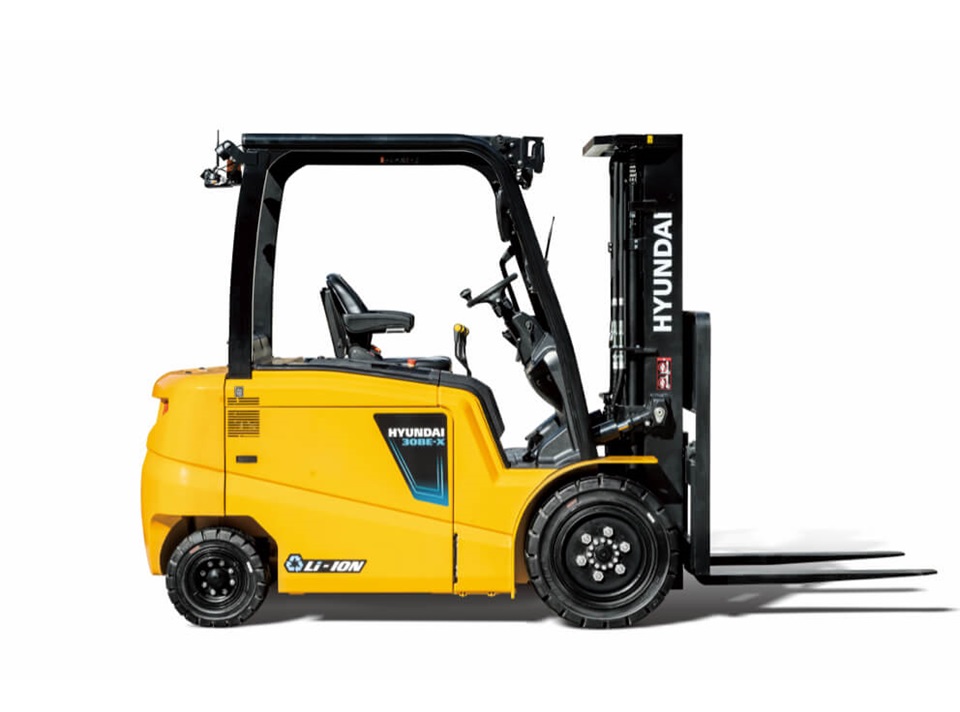
| Hyundai 35BE-X | 3.500 kg | €31,950 excl. VAT | € 459 p/m* | Heavier pallets, production and shipping |
Lease amounts are indicative and depend on the term, acceptance, execution, and conditions. Always request a current quote.
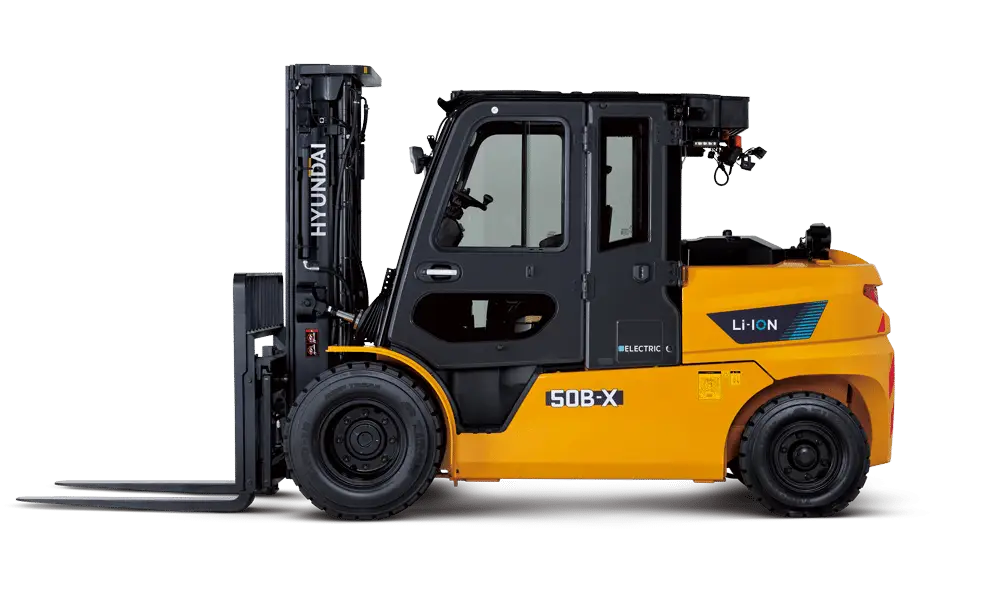
Lithium-ion heeft een hogere aanschafprijs, maar met lease wordt het verschil vaak overzichtelijker. In plaats van één grote investering kijkt u naar maandlasten, inzetzekerheid en besparing op stilstand of onderhoud.
Bij intensief gebruik kan het verschil in maandlasten tussen loodzuur en lithium-ion kleiner zijn dan het operationele voordeel. Vooral wanneer u de truck dagelijks nodig heeft, is het verstandig om de leasevariant ook door te rekenen.
Learn more about forklift leasing of bekijk onze electric forklifts.
U kunt zelf al een eerste inschatting maken. Noteer niet alleen de meerprijs, maar vooral hoeveel tijd, ruimte en stilstand u kunt besparen. Dat hoeft niet meteen exact te zijn; een praktische inschatting geeft vaak al richting.
Lithium-ion is niet altijd nodig. Als de heftruck weinig draait, er voldoende laadtijd is en stilstand weinig impact heeft, kan loodzuur financieel logischer zijn. Ook wanneer het budget zeer strak is en de inzet beperkt blijft, kan de meerprijs van lithium-ion moeilijker terug te verdienen zijn.
De beste keuze is dus niet “altijd lithium”, maar “de accu die past bij uw inzet”. Daarom is goed advies belangrijk. De praktijk bepaalt de terugverdientijd.
Wij rekenen graag mee op basis van uw draaiuren, laadmomenten, inzet, ploegendienst, machinekeuze en leasewens. Zo weet u of lithium-ion financieel slim is of dat loodzuur beter past.
Ook bij lithium-ion blijft veilig laden belangrijk. De laadplek moet logisch zijn ingericht, de lader moet passen bij de accu en chauffeurs moeten weten wanneer en hoe er geladen wordt. Lithium-ion vraagt minder onderhoud dan loodzuur, maar is geen excuus om laadgedrag en service te negeren.
Daarnaast blijft periodiek onderhoud belangrijk voor de hele heftruck: banden, remmen, mast, hydrauliek, verlichting en veiligheidsvoorzieningen. Bekijk ook onze pagina over service and maintenance. Voor veiligheidskeuringen verwijzen wij naar VA-keur.
Lithium-ion is de meerprijs vooral waard wanneer uw heftruck veel draait, snel beschikbaar moet blijven en stilstand duur is. Bij 2- of 3-ploegendienst, korte laadmomenten, intensief magazijnwerk of productieprocessen kan de terugverdientijd verrassend gunstig zijn.
Bij lichte inzet, voldoende nachtelijke laadtijd en beperkte draaiuren kan loodzuur nog steeds een goede keuze zijn. De juiste beslissing hangt daarom af van uw dagelijkse praktijk, niet van een algemene voorkeur voor lithium of loodzuur.
Heftruckkopen.com helpt u de rekensom maken. Als officiële Hyundai importeur kijken wij naar machine, accu, lader, inzeturen, lease, onderhoud, veiligheid en service. Zo koopt u geen accu op gevoel, maar op basis van een praktische berekening.
Een lithium-ion heftruck verdient zich vooral terug bij intensief gebruik, ploegendienst, korte laadmomenten en situaties waarin stilstand veel geld kost. De exacte terugverdientijd hangt af van de meerprijs en de jaarlijkse besparing.
Nee. Bij lichte inzet of voldoende nachtelijke laadtijd kan loodzuur financieel prima zijn. Lithium-ion is vooral interessant wanneer beschikbaarheid, tussentijds laden en minder onderhoud belangrijk zijn.
Deel de meerprijs van lithium-ion door de jaarlijkse besparing. Neem in die besparing onder andere onderhoud, stilstand, accuwissels, laadruimte, productiviteit en inzeturen mee.
Yes, especially when the forklift runs many hours and needs to be charged intermittently. In a light two-shift operation, lead-acid can sometimes also be sufficient.
Bij 3-ploegendienst is lithium-ion vaak interessant omdat de heftruck bijna continu beschikbaar moet zijn en er weinig tijd is voor lange laadblokken. De laadstrategie moet wel goed worden ingericht.
Ja. Lease kan de hogere aanschafprijs van lithium-ion overzichtelijker maken. U kijkt dan naar maandlasten, inzetbaarheid en operationele besparing in plaats van alleen naar de aanschafprijs.
Bel 0168 467 467 of vraag direct advies aan. Wij kijken naar uw draaiuren, laadmomenten, inzet, leasewens en terugverdientijd.

 English
 Dutch
 German