
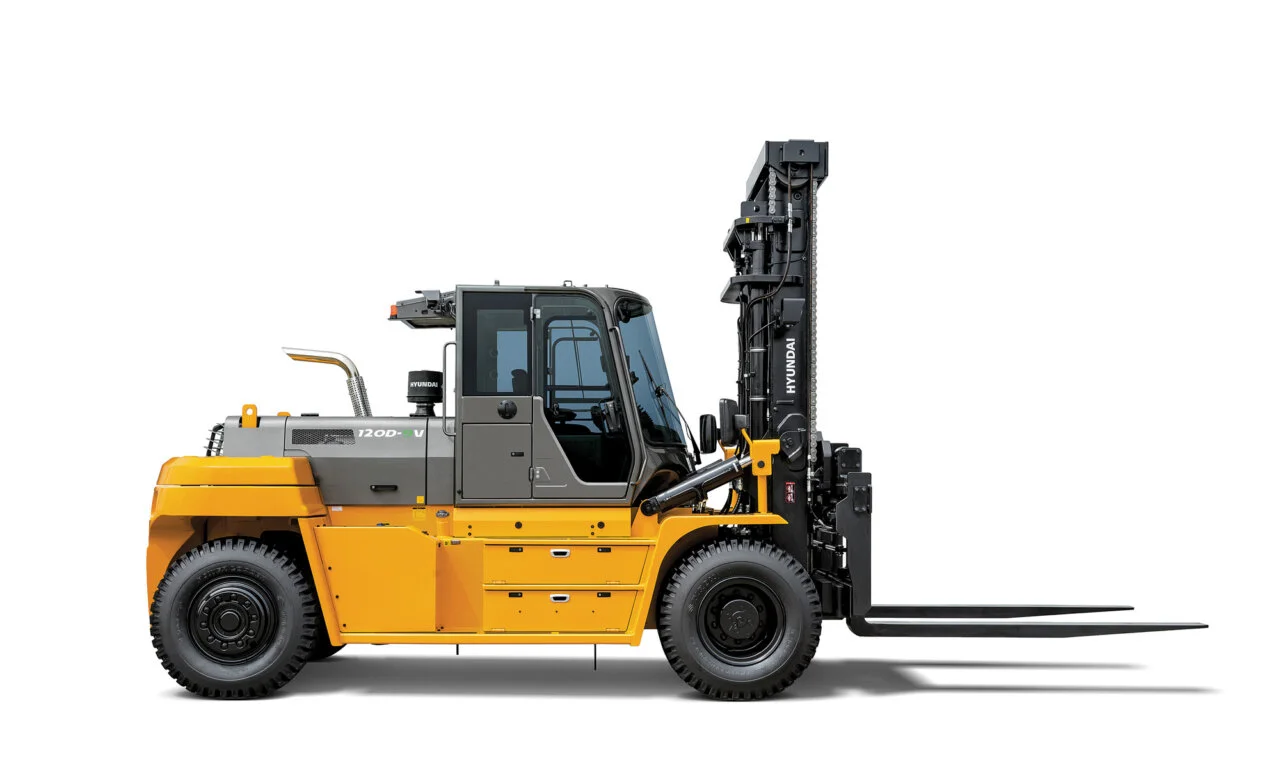
with a forklift public road EV: license plate, driver's license and regulations in 2026
Sometimes a forklift only drives a few meters on the street, for example between two business premises. Yet rules still apply for registration, license plates, driver's licenses, lighting, and insurance, among other things. In this guide, you can read which checks you must perform before setting off.
The short answer
A forklift cannot simply go onto public roads. For many forklifts that participate in traffic as mobile machinery, you must check the registration and license plate status in advance. The driver generally needs a T driving license, unless the forklift meets all the conditions of the narrow vehicle exemption. The machine must also be technically suitable and appropriately insured.
When does a forklift drive on public roads?
The question seems simple, but in practice it often involves short trips: crossing a road, driving from the warehouse to an outdoor area, or commuting between two locations. As soon as the forklift actually participates in traffic on a public road, you must check the rules for the vehicle, the driver, and the route.
That also applies when the distance is only a few tens of meters. A short crossing does not exempt you from traffic regulations. According to the national government, a T tractor license is not required on private roads, fields, and closed private property. This is separate from the employer's obligation to only let sufficiently instructed and competent employees work with a forklift.
Private enclosed grounds
No public road participation. A T-driving license is not mandatory there, but occupational safety, instruction, maintenance, and the RI&E remain important.
Public road or crossing
Check registration, license plate, driver's license, insurance, technical equipment, and the permitted route before the forklift departs.
A forklift truck often falls under the category of mobile machinery
Since 2021, the former category motor vehicles with limited speed (MMBS) is replaced by the mobile machinery category. The Dutch government explicitly mentions forklifts as an example of mobile machinery for which a T-driving license is often required on public roads.
The exact registration and approval situation depends on factors such as the construction, date of commissioning, maximum design speed, dimensions, and use of the machine. Therefore, it is unwise to rely solely on the year of manufacture or the nameplate.
Does a forklift need a license plate?
Not every forklift automatically has the exact same registration requirement. However, since January 1, 2025, it is mandatory for all (agricultural) vehicles and mobile machinery subject to the registration requirement to display a license plate. For a forklift that needs to go onto public roads, the first step is therefore always: determining whether the specific vehicle is subject to registration.
| Situation | What to check? | Practical advice |
|---|---|---|
| New forklift for street use | Vehicle category, registration, license plate and admission. | Include public road deployment in your order and configuration. |
| Existing forklift without license plate | Whether registration is mandatory and whether an RDW inspection is required. | Don't just “quickly” drive to the other location first; check the status beforehand. |
| Used imported forklift | Origin documents, identification, vehicle data and Dutch registration. | Ask before purchase which documents are available for registration. |
| Only on private property | No public road use, but internal safety and maintenance requirements apply. | Record in the RI&E that the machine does not leave the site. |
The RDW may require additional data or an inspection for registration or approval. Therefore, do not only calculate with the purchase price, but also with possible costs for vehicle modification, documentation, inspection, license plate, and insurance.

What driver's license is required for a forklift on public roads?
For driving a mobile machine on public roads, in principle a T driver's license necessary. The central government explicitly mentions forklifts as an example. An internal forklift certificate is useful as proof of training and instruction, but does not replace the legally required driver's license for participation in public traffic.
The limited exception for small forklifts
According to the national government, a T-driving license is not required when the mobile machine all three meets the following conditions:
Lighting, mirror and visibility
A forklift that goes onto public roads must comply with the applicable vehicle requirements. For (agricultural) vehicles and mobile machinery, the national government specifies at least a left exterior mirror and, among other things, the following lighting:
Depending on dimensions, construction, and deployment, additional requirements may apply to reflectors, markings, signaling, or exemptions. Also check the brakes, tires, steering system, horn, windshield wipers, and sightlines in accordance with the manual and applicable vehicle regulations.
What is the speed limit for a forklift on public roads?
The national government states a general maximum speed of 25 km/h for agricultural and construction vehicles. Under certain conditions, with a license plate, a maximum speed of 40 km/u can be driven on roads suitable for this purpose. However, with a forklift, never automatically assume 40 km/u: the design speed of the machine, the registration data, and the local traffic situation may dictate a lower speed.
Agricultural vehicles and mobile machinery are not permitted on motorways, highways, and roads closed to these vehicle categories. Additionally, municipalities or provinces can determine which routes are suitable.
| Route question | Control |
|---|---|
| Is this vehicle category allowed on this road? | Check traffic signs and local restrictions. |
| Is the route safe for slow traffic? | Watch out for cyclists, roundabouts, narrow shoulders and busy intersections. |
| Does the forklift fit within the width and height? | Check mast, cabin, mirrors, forks, and any load. |
| Is an exemption required? | For non-standard dimensions or weights, permission may be required. |
Check the insurance before public road use
Do not assume that a general commercial liability insurance, machinery insurance, or site policy automatically covers every traffic accident. Have the insurer or broker confirm in writing prior to the first trip that the specific forklift is covered for participation in traffic on public roads.
Provide at least the chassis number, license plate if applicable, vehicle category, use, area of use, and the driver situation. Also, inquire how damage to your own machine, cargo, buildings, and third parties is insured.
Step-by-step plan: safely and correctly hitting the public road
Describe the actual effort
Record route, distance, frequency, road type, cargo, time, and driver. An occasional crossing requires the same basic check as daily commuting.
Determine the vehicle category
Check the classification of the forklift based on type, chassis number, year of manufacture, and construction.
Check registration and license plate
Determine whether registration is mandatory and whether the license plate, vehicle data, and any inspection are in order.
Check the driver
Determine whether category T is required. Use the 130-centimeter exception only when it is demonstrably met that all conditions are fulfilled.
Perform a technical road inspection
Check lighting, mirrors, tires, brakes, steering, horn, visibility, license plate, and any signaling.
Confirm insurance coverage
Have the insurer confirm in writing that public road use with this specific machine is insured.
Check the route and instructions
Establish the maximum speed, route, intersections, prohibited roads, and emergency procedure in a brief work instruction.
Store documents centrally
Keep the vehicle registration certificate, insurance certificate, vehicle data, maintenance records, instructions, and any exemptions demonstrably together.
Include the public road deployment directly in the purchase advice
When choosing a new or used forklift, we look not only at lifting capacity and lifting height, but also at the surface, route, lighting, tires, cabin, visibility, and documentation. The final registration and approval are assessed by the competent authorities.
These errors often occur in practice
Frequently asked questions about a forklift on public roads
Is a forklift allowed to cross public roads?
That is only possible when the forklift, driver, and insurance situation comply with the applicable rules. A short crossing is not a general exemption.
Does every forklift need a license plate?
No, not every forklift automatically has the same registration requirement. When the machine is subject to the registration requirement, a license plate requirement has been in effect since January 1, 2025. Check the specific vehicle status with the RDW.
Do I need a T-license for a forklift?
For a mobile machine on public roads, usually yes. There is a limited exception for machines with a maximum width of 130 centimeters that are used as forklifts and cannot tow a trailer or interchangeable towed machine. All conditions must be met.
Is a forklift certificate sufficient on public roads?
No. A forklift certificate or internal instruction does not replace a potentially mandatory T-license. They are two different subjects: safe working and legal driving authority.
How fast is a forklift allowed to drive on the street?
The general speed limit for this vehicle group is 25 km/h. Under certain conditions, 40 km/h may apply, but the construction speed, license plate registration, and local road rules may dictate a lower speed.
Must a forklift be insured for public roads?
Ensure it is recorded in writing prior to the trip that participation in public traffic with the specific machine is covered. Do not automatically assume coverage via a general business or machinery insurance policy.
Is it better to transport a forklift by truck?
For longer distances, busy routes, insufficient road equipment, or doubts about authorization, transport by a suitable truck is often the safer and more practical choice.
- National government – rules for construction and agricultural vehicles
- Dutch Government – registration and license plate requirement
- National government – T-driving license for mobile machinery and forklifts
- Central Government – Speed and permitted roads
- RDW – check current vehicle and registration requirements
This article is informative and does not replace an individual assessment by RDW, insurer, municipality, police, or legal advisor. Regulations and vehicle classification may change.
 English
  Dutch
Dutch  German