

How do you check the battery of a used electric forklift?
The battery can determine a large part of the technical and financial value of a used electric forklift. In this guide, you will read how to check lead-acid and lithium-ion, which documents to request, and why a real capacity test says more than a full battery meter.
The short answer
Never judge a used forklift battery solely on its age, dashboard percentage, or a short test drive. First, check what type of battery is installed. Then, request the technical specifications, history, and appropriate charger. For lead-acid batteries, have a capacity test and cell inspection performed; for lithium-ion batteries, request a BMS report including State of Health, cycle count, cell balance, and temperature and fault history. This is the only way to reasonably estimate the remaining service life and the risk of needing a replacement.
Why the battery strongly influences the value of a used electric forklift
With an electric forklift, the battery does not just determine how long the machine can operate. The battery also affects the power during peak loads, charging planning, operational reliability, and the likelihood of unexpected post-purchase investments.
A used forklift can look neat technically and have few operating hours, while the battery may still be heavily aged due to age, unfavorable charging behavior, heat, deep discharge, or insufficient maintenance. Conversely, an older machine with a recently tested or replaced battery can actually be an interesting purchase.
First, determine what type of battery is in the forklift
The appropriate testing method varies greatly depending on the battery technology. Open, wet lead-acid traction batteries are evaluated differently than sealed gel or AGM systems. With lithium-ion batteries, the electronics of the Battery Management System play a key role.
Flooded traction battery
- Inspection of container, cells, cables, and plug
- Maintenance History and Water Refills
- Cell voltage and possibly specific gravity
- Controlled capacity test
Battery pack with BMS
- Read out SOH, cycles and available energy
- Cell voltage difference and temperature history
- Alarms, deep discharge, and charging errors
- Compatibility of battery, truck, and charger
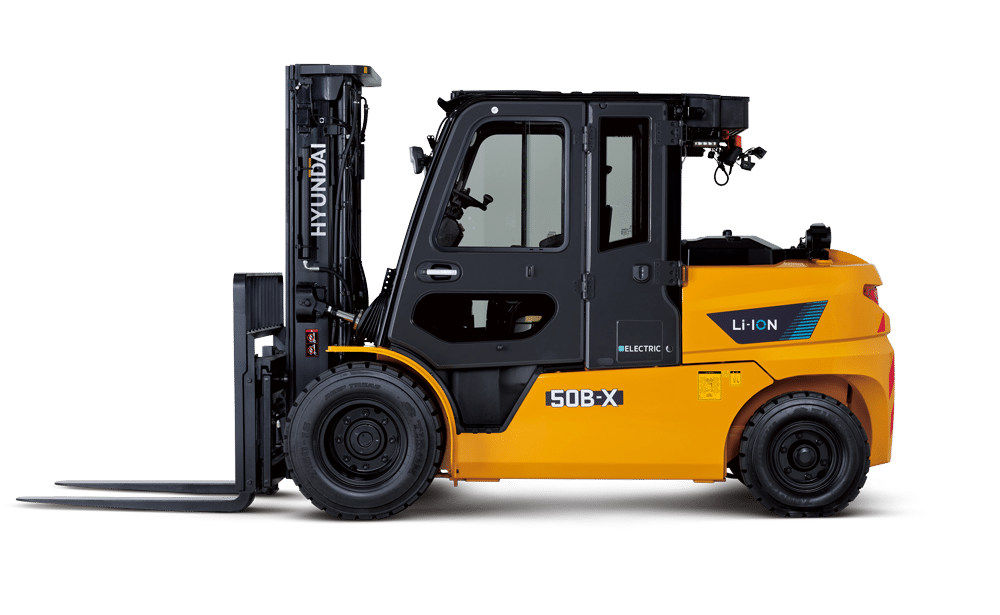
Check type plate, history and suitable charger
Do not start by measuring, but by identifying. The battery and charger must demonstrably match. Request clear photos of the nameplates and record the data in the purchase agreement or delivery documentation.
| Given | Why important? | What do you need to check? |
|---|---|---|
| Nominal voltage | Must match the truck and loader. | For example 24, 48 or 80 volts; check nameplate and settings. |
| Nominal capacity | Basis for the capacity test. | Ah, regarding lead-acid or usable energy/capacity according to the manufacturer. |
| Serial number and year of manufacture | Makes history and warranty verifiable. | Compare battery, invoices, reports and vehicle data. |
| Weight and dimensions | The battery can be part of the counterweight. | Check minimum weight and correct positioning according to the truck manufacturer. |
| Printer type | Improper loading can harm performance and lifespan. | Voltage, charging profile, plug, communication, and software compatibility. |
| Maintenance history | Show how the battery has been handled. | Inspections, cell repairs, BMS errors, charger faults and replacements. |
| Warranty terms | “Warranty” can only apply to the truck. | Ask explicitly which battery capacity and which parts are covered. |
First perform a safe visual inspection
A visual check does not prove how much capacity is left, but it can immediately reveal serious defects or poor maintenance. Have the inspection carried out with the machine switched off and in accordance with the safety instructions of the truck, battery, and charger.
A real capacity test says more than a full battery meter
The charging status on the dashboard is often called State of Charge (SOC). It indicates how full the battery is at that moment. The technical condition is called State of Health (SOH)how much usable capacity and performance remain compared to the original or nominal value.
SOH (%) = measured usable capacity ÷ rated capacity × 100
A reliable capacity test is performed in accordance with the battery and truck manufacturer's instructions. In broad terms, the battery is correctly fully charged, discharged to the specified end point under controlled conditions, and the amount of amp-hours or energy actually delivered is measured.
Identify and prepare battery
Check battery type, nominal capacity, temperature, charger, and manufacturer's instructions.
Fully loaded correct
Use the appropriate charger and allow any cooling, balancing, or resting time to elapse as prescribed.
Controlled discharge
Use a calibrated tester or a reproducible load. Record current, voltage, temperature, and time.
Compare result
Compare the measured usable capacity with the nominal value and assess cell behavior, voltage drop, and temperature.
Link report to your deployment
A battery may be technically usable, but still have insufficient reserve for your full working day or shift.
These bandwidths are practical purchasing indications and not universal factory standards. The permitted minimum depends on the battery type, manufacturer, application, warranty conditions, and your daily usage.
Example of a usable test report
Not only a single percentage, but the combination of capacity, load behavior, and deviations counts.
How to check a used lead-acid forklift battery
With an open lead-acid traction battery, in addition to capacity, you must also look at maintenance, cell balance, and mechanical condition. A battery may still show sufficient voltage, but drop quickly under load because one or more cells are weaker.
| Control | What could it indicate? | Who carries this out? |
|---|---|---|
| Visual cell inspection | Bulging cells, leakage, corrosion, damaged caps or connections. | Trained mechanic or battery specialist. |
| electrolyte level | A structurally too low level can damage plates; overfilling can cause leakage. | According to manufacturer specifications and with appropriate PPE. |
| Specific gravity | Differences between cells can indicate imbalance or a weak cell. | Only in suitable open cells, by an expert. |
| Cell voltage at rest and under load | Abnormal deviations or rapid voltage drop. | With suitable measuring equipment and safety procedure. |
| Capacity test | Actually available Ah and practical deployment duration. | Battery or service technician. |
| Load curve | Whether the battery and charger work together correctly and the charging process proceeds normally. | Via charger data or external measuring equipment. |
How to check a used lithium-ion forklift battery
With lithium-ion, a visual inspection is only the beginning. The most important information is typically in the Battery Management System. Ask for a traceable diagnostic report and check whether this report actually belongs to the serial number of the offered battery.
Test the forklift under a realistic load
An unloaded drive across a parking lot says little. Test the machine with an appropriate, safe load and within the applicable capacity limits. Preferably, simulate your daily work: driving, accelerating, braking, lifting, tilting, and multiple cycles in succession.
Reken een zwakkere accu door in de aankoopprijs
Vraag vóór aankoop een actuele prijs op voor een passende vervangingsaccu, lader en eventuele montage of software-inregeling. De kosten verschillen sterk per spanning, capaciteit, accutype, gewicht, afmetingen, laadtechniek en voertuigmodel.
Vergelijk vervolgens drie scenario’s:
- De bestaande accu blijft voldoende voor uw dagelijkse inzet.
- De accu vraagt tussentijds laden, waardoor capaciteit en productiviteit anders worden.
- Vervanging is binnen korte tijd nodig, waardoor de werkelijke aanschafprijs van de occasion hoger uitvalt.
Checklist gebruikte elektrische heftruckaccu
Rode vlaggen bij de verkoper
Laat truck, accu en lader als één systeem beoordelen
Wij kijken bij een occasion niet alleen naar draaiuren en uiterlijk, maar ook naar accutype, dagelijkse inzet, laadmogelijkheden, hefvermogen, mast, banden en toekomstige kosten. Zo voorkomt u dat een scherpe aankoopprijs later wordt ingehaald door accuproblemen of onvoldoende werkduur.
Veelgestelde vragen over een gebruikte heftruckaccu
How do I know if a used forklift battery is still good?
Request a recent capacity test or, in the case of lithium-ion, a traceable BMS report. Combine this with the history, a visual inspection, and a test drive under realistic load.
Is the production year of the battery sufficient to determine its condition?
No. Age is just one factor. Charging behavior, temperature, depth of discharge, maintenance, cycles, and storage can have a major impact on the actual condition.
What is the difference between SOC and SOH?
SOC is the current state of charge: how full the battery is right now. SOH is an estimate of the remaining health and usable capacity compared to its original condition.
What SOH is good for a used forklift?
Dat hangt af van uw inzet en de meetmethode. Een waarde boven ongeveer 80% kan in veel toepassingen nog goed bruikbaar zijn, maar moet worden beoordeeld samen met werkduur, piekbelasting, celgedrag, garantie en fabrikantcriteria.
Can I test a forklift battery myself with a multimeter?
A simple voltage measurement is insufficient to reliably determine capacity and can be dangerous with traction batteries. Have measurements and capacity tests performed by an expert with appropriate equipment.
What should be included in a BMS report of a lithium-ion battery?
Request at least SOH, charge cycles, available capacity or energy, cell voltage differences, temperature history, alarms, faults, deep discharge, and identification of the battery serial number.
Is a new battery in an old forklift always a good idea?
No. Also check the condition and value of the motors, electronics, mast, hydraulics, tires, brakes, and charger. Sometimes a new or younger forklift makes more financial sense.
Should the charger be included with the used forklift?
Not by definition, but you do need a demonstrably suitable charger. Check voltage, charging profile, plug, communication, and any software integration.
- Volg altijd de handleidingen en meetprocedures van de batterij-, lader- en heftruckfabrikant.
- Laat capaciteitstests, celmetingen en lithiumdiagnose uitvoeren door gekwalificeerde technici.
- See also: lead-acid or lithium-ion forklift battery.
- See also: hoe lang gaat een heftruckaccu mee?
- Vergelijk: nieuwe of tweedehands heftruck kopen.
De genoemde SOH-bandbreedtes zijn indicatief. Een definitief oordeel vereist productspecifieke documentatie, professionele metingen en een beoordeling van uw werkelijke inzetprofiel.
 English
  Dutch
Dutch  German