Skip to content
✓ Official Hyundai importer for the Netherlands · ★★★★★ 5,0/5
Electric driving starts with good charging

Charging infrastructure for electric forklifts: what do you need?

Buying an electric forklift is one step. The right charging infrastructure for electric forklifts then determines whether your machine remains reliably deployable every day. Think of chargers, power capacity, charging location, safety, ventilation, and charging planning.

Charger Tailored to battery, operating hours and charging moments
Electricity Check connection and peak load in advance
Safety Properly arrange charging location, routing, and work instructions
Electric Hyundai forklift with good charging infrastructure
Electric only works with good charging planning The right charging solution prevents downtime and battery issues.
Li-ion possible

Why charging infrastructure is so important

More and more companies are switching to electric forklifts. That makes sense: electric forklifts are quiet, emission-free, powerful, and suitable for warehouses, production halls, distribution centers, and logistics environments. Yet one component is often underestimated: the charging infrastructure.

A forklift that is not charged on time will stand still. A charger that does not match the battery can limit operations. And a charging location that is improperly set up can cause unsafe situations or inconvenient walking and driving routes. Therefore, when purchasing an electric forklift, you must also immediately consider chargers, power supply, and charging planning.

Good charging infrastructure ensures less downtime, better battery life, and more certainty in your daily planning.
What should you pay attention to regarding charging infrastructure for electric forklifts?

The right charging solution depends on your forklift, battery, operating hours, working hours, building, and available power capacity. Below are the key points to consider.

1

Accutype

A lead-acid battery requires a different charging area and planning than a lithium-ion battery. This makes a big difference, especially with opportunity charging.

2

Daily working hours

A forklift that operates a few hours a day has different requirements than a machine that is used almost continuously in shift work.

3

Available power

Check in advance whether your connection has sufficient capacity for one or more chargers. This prevents peak load issues.

4

Loading location

The charging location must be logically situated, safely accessible, and cause no obstruction to walkways, loading bays, or production flows.

5

Safety

Think of collision protection, clear markings, fire safety, ventilation for lead-acid batteries, and proper work instructions.

6

Future growth

Are you buying one electric forklift now, but expecting more electric machines later? Then plan ahead for expansion.

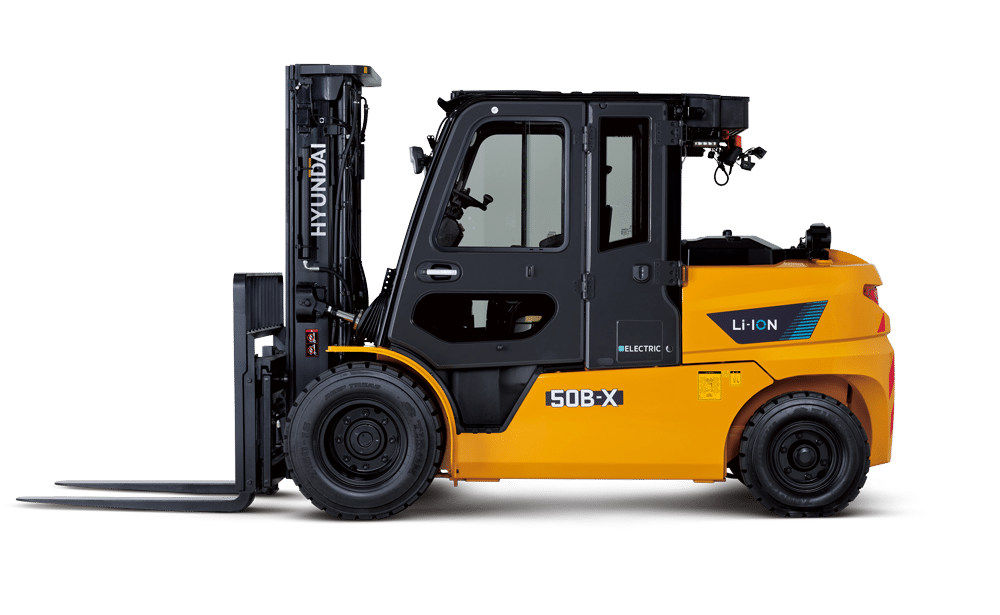
Heavy electric Hyundai forklift with lithium-ion charging strategy
For heavy electric forklifts, loading capacity is just as important as lifting capacity.
Electric forklift delivered to company with charging schedule
Proper preparation prevents the new electric forklift from breaking down due to charging issues.

Lead-acid or lithium-ion: difference in cargo space

The choice between lead-acid and lithium-ion has a major impact on your charging infrastructure. With lead-acid, you must take into account longer charging times, cooling time, maintenance, and often a separate charging area. Lithium-ion is more flexible, as opportunity charging is much more feasible.

Part lead-acid battery Lithium-ion battery
Charging Time Usually fully charge after use Opportunistic charging is often precisely what is interesting
Cargo space Calls for more attention to ventilation and safety Often more compact and easier to integrate
Maintenance More attention needed for battery maintenance Requires less maintenance
Shift Work Can request extra batteries or battery swap times Strong in boost charging and intensive use
Planning Tighter planning to prevent battery downtime More flexible through opportunity charging

Please note: choose not only the forklift, but also the right battery and charging strategy. Otherwise, you will not get the most out of electric driving.

For more in-depth information, also check out our blog about lead-acid or lithium-ion forklift battery and the page about electric forklifts for shift work .

Step-by-step plan: how to set up a charging station for electric forklifts

A charging point does not have to be complicated, but it must be set up logically and safely. Use this step-by-step plan as a basis before buying an electric forklift.

Determine how many hours the forklift operates per day

Record the number of operating hours, breaks, peak times, and any shift work. This determines whether normal charging is sufficient or if intermediate charging is necessary.

Choose the correct battery type

For light-duty use, lead-acid can be suitable. For intensive use, shift work, or many short charging opportunities, lithium-ion is often a better choice.

Check the electrical connection

Have it assessed whether your connection has sufficient capacity for the chosen charger. Also consider future expansion with additional electric forklifts.

Choose a safe charging location

Preferably place the charging spot outside of busy traffic routes, without blocking the logistics flow. Ensure clear marking and collision protection.

Create clear loading rules for drivers

Agree on when charging will take place, who will connect the truck, what to do in the event of malfunctions, and how the charging location must be used safely.

Tip: with lithium-ion, you can often charge during breaks or shift changes. We call that opportunity charging.

Buying an electric forklift? Think about charging right away

An electric forklift only performs optimally when the battery, charger, and work process are properly aligned. That is why we look not only at lifting capacity and mast, but also at charging times, power supply, and daily operation.

Buy Hyundai electric forklift with matching charging infrastructure
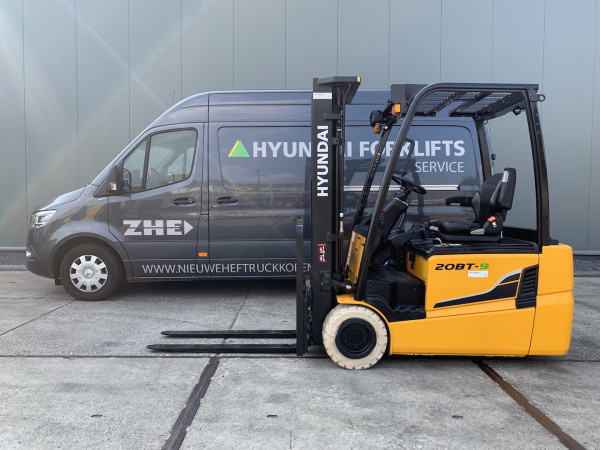
Compact electric Hyundai forklift for warehouse with charging station

Warehouse and production

Often suitable for electric forklifts with fixed charging times or lithium-ion opportunity charging.

Forklift for production hall
Heavy-duty electric forklift for intensive use and charging planning

Intensive commitment

With many operating hours, lithium-ion is often attractive due to opportunity charging and less downtime.

Electrical for shift work
Rent an electric forklift to test loading strategy

Test first?

Are you having doubts about electric driving or charging times? Then temporary renting can be a smart intermediate step.

View fork lift truck rental

Electric forklift charging infrastructure checklist

Use this checklist before switching to electric. This prevents the forklift from being delivered while the charging location is not yet properly arranged.

✓

Number of forklifts

How many electric forklifts do you currently use and how many do you expect to add later?

✓

Daily deployment

How many hours does the forklift operate per day and are there breaks during which it can be charged?

✓

Accutype

Will it be lead-acid or lithium-ion? That choice determines a lot for cargo space and planning.

✓

Power connection

Is there sufficient capacity for the charger, and what happens if multiple machines charge at the same time?

✓

Safe charging location

Is the charging spot marked, protected against collisions, and logically accessible?

✓

Work instruction

Do drivers know when and how to load, and what to do in the event of a malfunction?

Always consider the safety of your internal transport as well. To do this, review the external information from VA-keur and our explanation about forklift inspection .

Frequently asked questions about charging infrastructure for electric forklifts

What is charging infrastructure for electric forklifts?

Charging infrastructure is everything needed to charge electric forklifts safely and reliably. Think of chargers, power connection, charging location, marking, safety, ventilation, and charging planning.

Does an electric forklift need a separate charging area?

That depends on the battery type and the situation. With lead-acid, a separate, well-equipped charging area is often more important. With lithium-ion, the charging solution is usually more flexible and can be integrated more compactly.

Is lithium-ion easier to charge than lead-acid?

Yes, lithium-ion is usually more flexible. Intermediate charging during breaks or shift changes is often possible, allowing the forklift to remain operational longer during the workday.

Should I have my power connection checked?

Yes, that is wise. Especially if you want to charge multiple forklifts at the same time or expand later, it is important to assess the available capacity and peak load in advance.

Can I rent an electric forklift first to test it?

Yes. Via heftruckhuren.com you can rent an electric forklift temporarily. That is useful if you want to test whether electric driving and the charging times fit your work process.

What is opportunity charging?

Opportunity charging means that you recharge the forklift intermittently during natural breaks, such as lunch, shift changes, or short periods of downtime. This is particularly interesting for lithium-ion batteries.

en_USEnglish

Easily request a quote for your forklift

Do you want to buy a forklift and know the costs immediately? Then request a no-obligation quote using the form below; we will contact you within 24 hours.