An outdoor forklift imposes different requirements than a truck for pure warehouse work. Terrain, weather conditions, tires, drive system, and comfort play a much larger role outside. In this blog, you will read what to look out for if you want to buy a new forklift for outdoor yards, storage, industry, or mixed use.

Working outdoors with a forklift is simply more demanding on both the machine and the operator. Think of uneven terrain, rain, wind, dust, mud, slopes, and fluctuating temperatures. Whereas a forklift in a tightly organized warehouse needs to be maneuverable and compact, a forklift used outdoors must above all be robust, stable, and reliable.
That’s why, when using a forklift outdoors, it’s wise to consider not only lifting capacity but also tires, traction, ground clearance, visibility, mast selection, and operator protection. The wrong choice can lead to reduced traction, faster wear and tear, more downtime, or unnecessarily uncomfortable working conditions.
When it comes to outdoor use, the first thing people often look for is a diesel forklift. That makes sense: diesel trucks excel in heavy-duty outdoor applications, long-term use, and higher capacities. They are widely used in industry, construction materials, storage and transshipment, and outdoor areas where power and reliability are key.
A LPG forklift may be a good option if you work both indoors and outdoors and are looking for flexibility. For companies that prioritize low emissions, low noise, and indoor use, a electric forklift are suitable, provided that the application and the substrate allow it.
Often the logical choice for heavy-duty outdoor work, high-intensity use, and industrial applications.
A good choice for mixed indoor and outdoor use and when flexibility is important.
Can also be interesting outside, especially on paved terrain and with lighter or mixed use.
When used outdoors, tires are crucial for traction, stability, and comfort. While solid rubber is often sufficient for indoor use, outdoor work may require different choices depending on the surface and intensity of use. Do you work on cobblestones, asphalt, concrete slabs, or rougher terrain? If so, the truck must be designed for those conditions.
Wear and tear also plays a greater role when driving outdoors. Choosing the wrong tires leads to a faster loss of traction, more vibration, and less comfort for the driver.
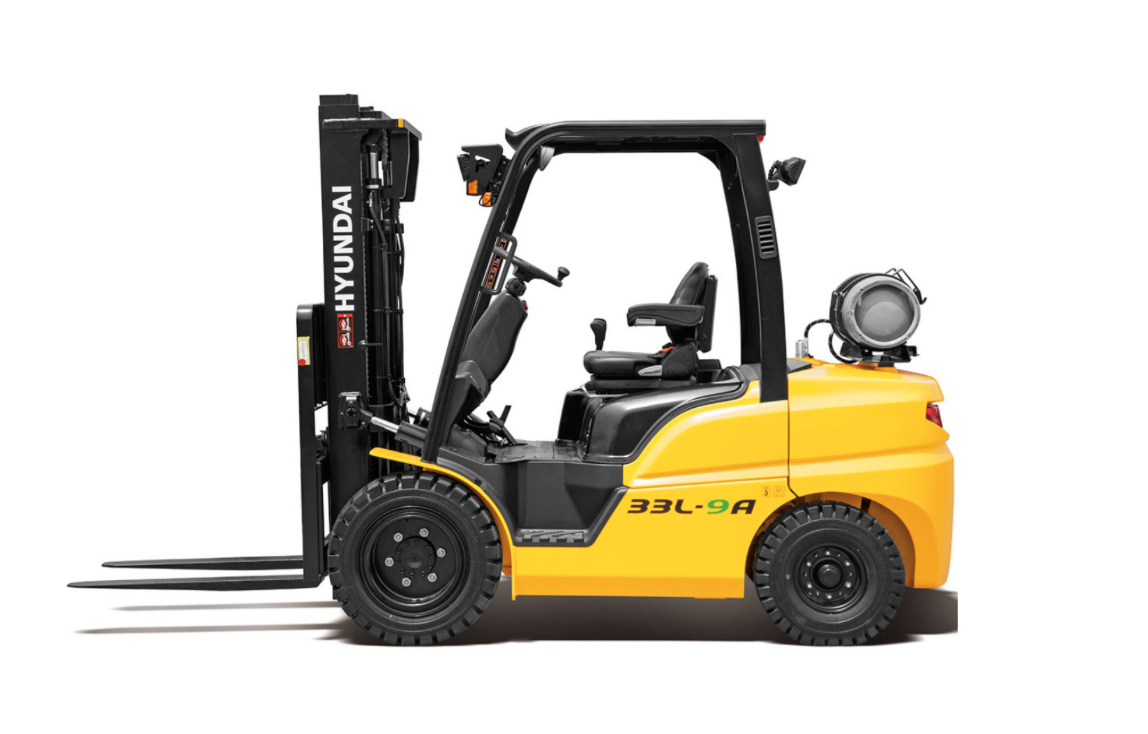
A forklift used outdoors often handles heavier loads, reaches greater lifting heights, or operates on less-than-ideal surfaces. In these situations, the choice of mast, the truck’s weight, and residual capacity are particularly important. A forklift must not only be able to lift sufficiently, but also remain stable in real-world working conditions.
Do you work with longer loads, wide goods, or do you frequently load and unload on uneven terrain? If so, the configuration must be tailored to those conditions. Attachments, tire type, and mast type all have a direct impact on the forklift’s overall performance.
When working outdoors, a driver often spends more time in the truck and is more exposed to the elements. That’s why visibility, ease of entry, cab features, seat comfort, and protection from rain or wind are important factors. Especially during intensive use, these features not only make work more pleasant but also lead to higher productivity and reduced fatigue.
Lighting, lines of sight, and ease of operation are also particularly important outdoors. If you work early in the morning, late in the evening, or in changing weather conditions, it’s worth including those options right from the start when configuring the truck.
A stationary forklift in an outdoor yard costs productivity immediately. That is why it is smart to look not only at the machine, but also at service, parts, and response time. Especially with outdoor use, a truck takes more of a beating, making maintenance and quick support even more important.
For general product information, you can check Hyundai Material Handling Europe. For information on inspection and safe use, please also VA-keur relevant. Within the practice is VA-keur standard an important starting point.
Don't you know yet exactly which truck best suits your outdoor work? Then it can be smart to first deploy temporary capacity via HeftruckHuren.com. This is how you test in practice which configuration works best. If it concerns structural use, then also forklift leasing be interesting to spread investments.
We are happy to help you choose the right Hyundai forklift for outdoor areas, industry, storage, and mixed use. This ensures you get a truck that is not only powerful on paper, but also performs optimally in practice.
That depends on your application. For heavy outdoor use, diesel often makes sense, while LPG or electric can also be interesting for mixed or lighter use.
Often yes. Outdoors, surface, grip, and comfort place different demands than indoors in a warehouse. Therefore, tire selection is an important part of the configuration.
Yes, in many situations indeed. Especially on paved surfaces and with appropriate use, electric can also be a good solution outdoors.
Also pay attention to tires, mast type, surface conditions, weather influences, visibility, comfort, and service organization. It is precisely these factors that often make the real difference outdoors.
Yes. Via HeftruckHuren.com Can you use temporary deployment to test your need practically first.

 English
  Dutch
Dutch  German