
Buying a new forklift: what to look out for in 2026?
A buy new forklift do not base this solely on price. The right machine must fit your loads, operating hours, working environment, lifting height, energy choice, and growth plans. In this comprehensive guide, you will read what to look for in 2026 really need to watch out for if you a want to buy a forklift that has performed reliably for years.
Whether you are looking for an electric forklift for indoor use, a diesel forklift for heavy outdoor work, or an LPG forklift for mixed use: the best choice always starts with a thorough assessment of your practical needs. That is precisely where things often go wrong. Companies focus too much on the purchase price and too little on utilization, maintenance, ergonomics, safety, and residual value.
Contents of this guide
- Why choosing the right forklift is so important
- 1. First determine your stake in practice
- 2. Choose the correct capacity and stability
- 3. Choose the right drive: electric, diesel or LPG
- 4. Pay attention to mast, lifting height, and clearance height
- 5. Look beyond just the battery or fuel
- 6. Safety, visibility and ergonomics
- 7. Maintenance, parts and service organization
- Total cost instead of just purchase price
- Buy a new forklift or rent first?
- Practical checklist for 2026
- Frequently Asked Questions
Why choosing the right forklift is so important
A forklift that does not properly suit your operations often ends up costing more over time than it appears to save upon purchase. Too light a machine loses capacity as soon as the load, fork length, or lifting height changes. Conversely, too heavy a machine is more expensive to purchase, energy-consuming, and maintain. An incorrect mast, unsuitable tires, or the wrong drive system can also lead to inefficiency, damage, or downtime.
Therefore, a professional purchase does not start with “which forklift is the cheapest?”, but with “which forklift best suits our daily operations?”. That difference ultimately determines your productivity, safety, and total costs.
Common logical fallacy
Many buyers base their choice on the nominal capacity on the nameplate. In practice, however, more factors play a role, such as:
- center of gravity of the load
- actual lifting height
- use of sideshift or fork positioner
- use on slopes, outdoor areas, or uneven floors
- intensity of use per day or per shift
1. First determine your stake in practice
The first question is not which machine you like, but what the forklift exactly needs to do. Do you work mainly inside a warehouse? Do you move pallets in narrow aisles? Or do you use the machine outdoors for heavy loads, longer travel distances, or intensive loading and unloading operations?
Note down at least your average load weight, peak loads, lifting height, aisle widths, daily operating hours, surface conditions, and whether the truck will be used indoors, outdoors, or a combination of both before making a purchase. Based on that, you can look specifically for a electric forklift, diesel forklift of LPG forklift.
Indoor use
For warehouses, production facilities, and shipping areas, electric is often the logical choice. You benefit from quiet operation, low emissions, and great driving comfort.
Outdoor area
For wet, dirty, or intensive outdoor applications, diesel often remains attractive, especially for higher capacities and heavier duty use.
Mixed-use
Do you work both indoors and outdoors? Then LPG can be a practical middle ground in certain situations, depending on ventilation, duration of use, and the operating environment.
2. Choose the correct capacity and stability
At a buy new forklift capacity is one of the most important points of attention. In practice, a 2.5-ton or 3-ton forklift is popular, but that does not automatically mean this is also the best choice for your company. A longer load, deviating center of gravity or additional attachments can affect the effective residual capacity.
Therefore, always check not only the weight of the load, but also the dimensions, the load center distance, and the required lift height. Especially with longer goods, crates, big bags, machinery, or heavy components, it is wise to size up slightly. This prevents you from choosing a forklift that seems suitable on paper, but lacks sufficient reserve in practice.
What to look out for regarding capacity
- What is the maximum weight of your standard loads?
- Are there peak loads that are heavier than average?
- Do fork length, attachments, or load center change the residual capacity?
- Does the elevated machine still need to be able to lift sufficiently?
- Do you have growth plans that will require the truck to be able to do more in 2 or 3 years?
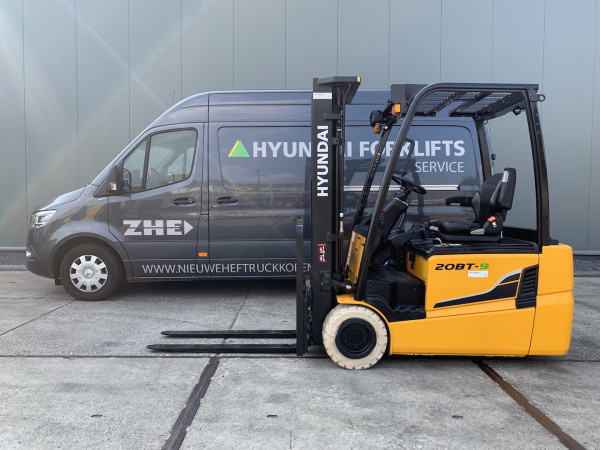

3. Choose the right drive: electric, diesel or LPG
The right drive system depends on your working environment, usage duration, and business objectives. In 2026, the market is shifting further toward electric, especially in warehouses and manufacturing environments. At the same time, diesel remains strong in heavy outdoor applications, while LPG remains attractive for some companies as a compromise between flexibility and usability.
| Drive | Often fits well with | Key benefits | Points of attention |
|---|---|---|---|
| Electric | Indoor use, warehouse, production, logistics | Quiet, low-emission, low daily maintenance, pleasant driving comfort | Charging infrastructure, battery choice, multi-shift deployment |
| Diesel | Heavy outdoor work, intensive effort, harsh conditions | Powerful, practical for long deployment, strong with heavy loads | Fuel consumption, emissions, less suitable for indoor use |
| LPG | Mixed indoor/outdoor use, flexible deployment | Fast tank change, wide applicability | Ventilation, fuel logistics, trade-off vs. electric |
Would you specifically like to read more about this choice? Then also check out: electric forklifts, diesel forklifts en LPG forklifts.
4. Pay attention to mast, lifting height, and clearance height
Many companies focus mainly on capacity, but forget the mast configuration. Yet it is precisely that configuration which largely determines whether the forklift can be used effectively in your warehouse or hall. A truck must not only be able to lift high enough, but also safely drive under doors, docks, racking, or passageways.
Therefore, carefully consider free lift, duplex or triplex mast, remaining capacity at height, and the combination with your working environment. Especially in warehouses with limited headroom or higher racking, this is a point where expert advice can prevent many problems.
Always check these 5 points
- maximum practical lifting height
- retracted mast height
- free lift for loading in containers or low spaces
- remaining capacity at altitude
- view from the cab with stacked loads
5. Look beyond just the battery or fuel
Especially with electric models, the choice of energy is important. Not only the truck, but also your usage profile must be right. How many hours does the machine run per day? Do you have one shift or multiple? Is intermediate charging possible? Do you want to invest in lithium-ion, or does a lead-acid battery better suit your application and budget?
A good choice prevents unnecessary downtime, loading pressure, or an overly expensive configuration. The same applies to diesel and LPG: not only the engine matters, but also consumption, refueling logistics, duration of use, and the environment in which you work.
Electric in 2026
Electric forklifts are becoming increasingly attractive for companies that want to operate quietly, cleanly, and efficiently. Especially in warehouses and production environments, this is often the most future-proof choice.
Don't just look at the price
A cheaper battery choice or lighter configuration may seem appealing, but it can later cause higher costs due to lower usability, extra charging time, or faster wear and tear.
Safety, vision, and ergonomics are often underestimated
Who a buying a new forklift, must not only look at the technology, but also at the driver. Good all-round visibility, logical controls, a comfortable step-in, a good seat position, and clear instruments make a huge difference in daily use. Especially during long shifts or intensive use, ergonomics and visibility directly affect both productivity and safety.
In addition, look at options such as lighting, safety signaling, cameras, load indication, non-marking tires, a closed cabin, or specific indoor and outdoor applications. In many companies, safety is no longer an afterthought, but a fixed part of the purchasing decision.
Safety questions for your purchasing meeting
- How good is the visibility of the forks, mast, and work environment?
- What lighting and signaling are required at your location?
- Do you need non-marking tires?
- Are extra mirrors, cameras, or safety systems desirable?
- Should the truck be delivered standard with inspection and delivery check?
7. Maintenance, parts and service organization
Buying a new forklift is one thing; keeping it operational for years is at least as important. Therefore, always ask how service, maintenance, and parts are arranged. How quickly can a response be made on-site? Are many parts readily available? Is there proactive thinking regarding preventive maintenance? And how does any warranty claim process work?
It is precisely at this point that the difference often arises between a machine that was “bought cheap” and a machine that truly performs well. A professional supplier looks beyond delivery alone and thinks along about maintenance intervals, inspections, replacement equipment, and support during intensive use.
Would you like to know more about periodic safety inspections? Then also check out the information from VA-keur.
8. Look at total costs instead of just the purchase price
The lowest purchase price is rarely automatically the best choice. A forklift truck must not only be affordable now, but also suit your business in the longer term. Therefore, it is smarter to look at the total costs over several years: energy or fuel, maintenance, downtime, residual value, battery choice, duration of use, and potential growth within your organization.
A more expensive machine with better ergonomics, a stronger residual value, a more efficient drive system, and prompt service can ultimately turn out to be more cost-effective than a cheaper alternative. Especially with daily use and multiple operators, that difference is often greater than many companies anticipate beforehand.
Buy a new forklift or rent first?
Are you still unsure about the right capacity or would you like to gain some practical experience first? Then it might be smart to rent temporarily before making a definitive investment. This way, you can test whether the chosen machine, drive, and configuration truly suit your workplace.
For temporary deployment, peak load, or bridging, you can also contact HeftruckHuren.com.
Practical checklist: buying a new forklift in 2026
Technical checklist
- What loads do you lift daily and what are the peak weights?
- What lifting height and clearance height are required?
- Do you work mostly indoors, outdoors, or a combination?
- Does electric, diesel, or LPG best suit your application?
- Are sideshift, fork positioner or other options needed?
- Which tires suit your floor and application?
Commercial checklist
- What are the total costs over multiple years?
- How are maintenance, warranty, and parts arranged?
- Does delivery include pre-delivery inspection and instruction?
- Is there support for growth or changing deployment?
- Would you like to buy, lease, or rent temporarily first?
- Does the supplier really fit your practice?
Frequently asked questions about buying a new forklift
What should I look at first when I want to buy a forklift?
Will electric usually be the best choice in 2026?
Should I only look at the capacity on the rating plate?
When is renting smarter than buying?
Why are maintenance and service so important upon purchase?
Conclusion
A buy new forklift Buying in 2026 demands more than just comparing quotes. Anyone who truly wants to make a good choice looks at application, capacity, drive system, mast, energy choice, safety, maintenance, and total cost. This is how you prevent getting a machine that looks right on paper, but does not perform optimally in practice.
Would you like personal advice on the correct implementation for your company? Then please contact us via Forkliftbuy.com or view the current selection at heftruckkopen.com.
 English
  Dutch
Dutch  German